







What's Happening?
Pete Townshend, guitarist for The Who, recently revealed in an interview with Classic Album Review that he intentionally avoided listening to Led Zeppelin during their peak, believing they were attempting to attract The Who's audience. Townshend also
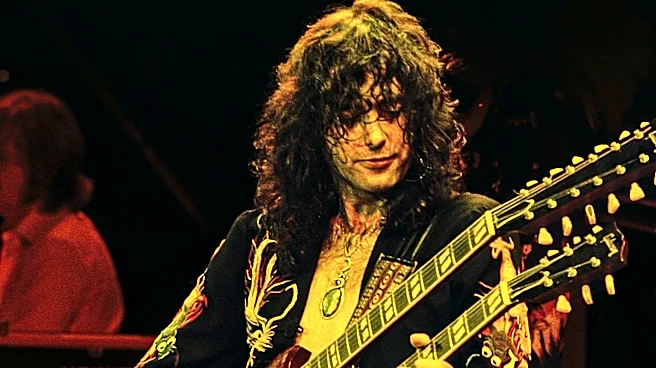
addressed the notion that The Who contributed to the creation of heavy metal, offering a nuanced perspective. While acknowledging that their 1970 live album 'Live At Leeds' is often cited as an influence, and Roger Daltrey has previously supported this view, Townshend expressed his personal struggle to connect with the heavy metal genre, despite recognizing the exceptional musicianship of its bands. He admitted that the only heavy metal band he truly listened to was AC/DC and that he has only recently begun to explore Led Zeppelin's catalog, even attempting to arrange a lunch with Jimmy Page.
Why It's Important?
This insight from Pete Townshend provides a unique historical perspective on the competitive landscape of rock music in the 1970s and the subjective nature of musical influence. His admission about avoiding Led Zeppelin due to perceived competition highlights the rivalries that existed between major bands, shaping their artistic directions and public perceptions. Furthermore, his measured assessment of The Who's role in heavy metal challenges a long-held belief within music history, prompting a re-evaluation of genre origins and influences. This discussion is crucial for musicologists and fans alike, as it offers a primary source's view on the evolution of rock music and the complex interplay between artists and emerging genres.
What's Next?
Townshend's comments may lead to renewed discussions and analyses among music critics and fans regarding the true origins of heavy metal and the specific contributions of various bands. His recent efforts to connect with Jimmy Page and explore Led Zeppelin's music could potentially lead to future collaborations or further public commentary, offering more insights into the relationship between these rock legends. This revelation might also encourage other musicians from that era to share their perspectives on inter-band dynamics and genre development, enriching the historical narrative of rock music.
Beyond the Headlines
Beyond the immediate musical implications, Townshend's candidness about his past competitive feelings and subsequent appreciation for Led Zeppelin speaks to the broader human experience of overcoming professional rivalries and evolving perspectives. It underscores how personal biases and competitive environments can initially blind individuals to the merits of others' work. His journey from avoidance to appreciation reflects a maturation of artistic outlook, suggesting that time and distance can offer new insights and foster respect among peers, even those once viewed as rivals. This narrative adds a layer of psychological depth to the history of rock music.