






What's Happening?
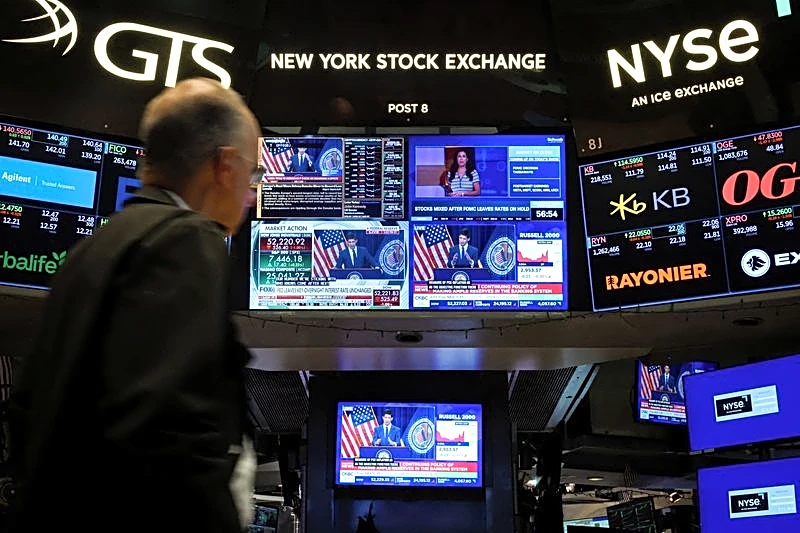
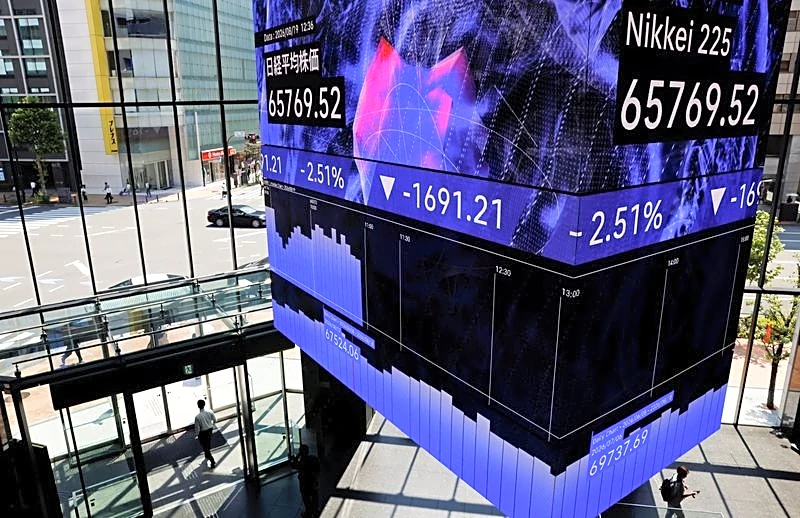
On October 19, 1987, the S&P 500 experienced its worst single-day decline on record, plummeting 20.5% to close at 224.84. This event, known as Black Monday, saw the Dow Jones Industrial Average drop an even steeper 22.6%. Despite the immediate and severe
market shock, an investment of $10,000 made at the close of Black Monday, with dividends reinvested, would have grown to approximately $776,000 by October 14, 2026. This represents an annual return of about 11.8%. The index did not reclaim its August 1987 record high until July 26, 1989, nearly two years after the peak. However, within a year of Black Monday, the index was already about 23% above its crash-day close. The market's valuation also shifted significantly, with the S&P 500 trading at about 21 times earnings in August 1987, which dropped to around 14 times earnings by November after the crash.
Why It's Important?
The historical event of Black Monday provides crucial insights into long-term investment strategies and market resilience. It demonstrates that even the most severe market downturns can present significant opportunities for investors with a long-term horizon. The substantial returns generated from an investment made on the day of the crash highlight the power of compounding and the importance of staying invested through periods of volatility. This event underscores the principle that timing the market is exceedingly difficult, and attempting to do so by selling during a crash can lead to substantial missed gains. Furthermore, the recovery period illustrates that markets can rebound, even if it takes time to regain previous highs. For current investors, this historical context suggests that steep market falls should be viewed as potential buying opportunities rather than reasons for panic selling, reinforcing the value of a disciplined, long-term investment approach, particularly in broad market index funds.
What's Next?
While Black Monday is a historical event, its lessons remain relevant for future market downturns. Investors are continually faced with decisions during periods of market stress. The key takeaway is that a steep fall has historically been a better time to buy than to sell for long-term investors. Future market corrections or crashes will likely test investor resolve, and those who recall the lessons from 1987 may be more inclined to maintain or even increase their investments rather than liquidate them. The ongoing debate about market valuations and potential economic headwinds means that understanding historical market behavior, especially during extreme events, remains a critical component of informed investment decision-making. The principle of dollar-cost averaging, or buying in pieces during a downturn, is also reinforced by the 1987 experience, as the absolute lowest point may not be immediately apparent.
Beyond the Headlines
The 1987 crash also offers deeper insights into market psychology and the behavioral aspects of investing. The immediate aftermath of Black Monday was characterized by widespread fear and uncertainty, yet those who acted counter-intuitively by buying into the market ultimately reaped significant rewards. This highlights the emotional challenges investors face during crises and the tendency for herd behavior to lead to suboptimal decisions. The event also spurred discussions about market circuit breakers and regulatory mechanisms designed to prevent such rapid and extreme declines, influencing market structure and rules in subsequent decades. From a broader economic perspective, Black Monday served as a stark reminder of the interconnectedness of global financial markets and the potential for rapid contagion. The long-term recovery underscores the fundamental growth capacity of the U.S. economy and the ability of corporate earnings to drive market appreciation over extended periods, even after severe shocks.