

What's Happening?
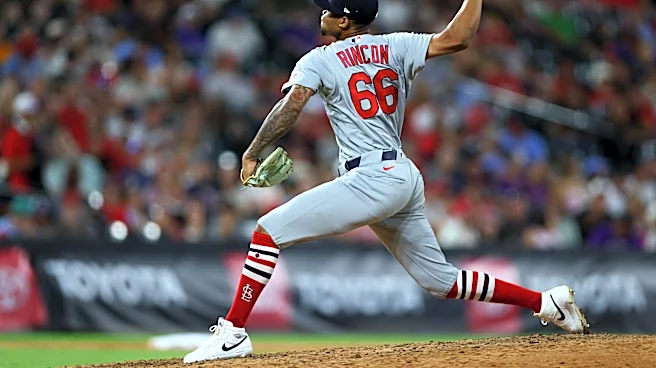
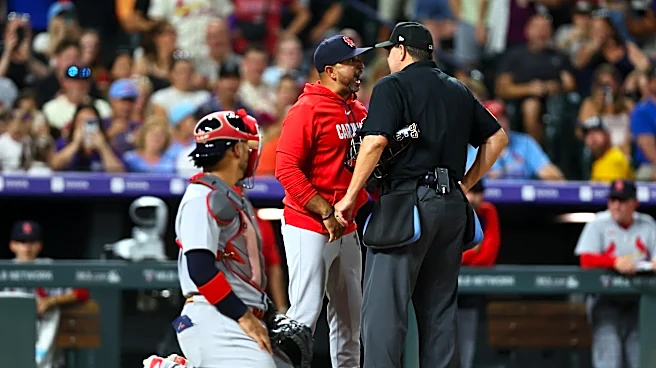
Major League Baseball (MLB) has informed veteran umpire Doug Eddings that he made an error in demanding St. Louis Cardinals rookie reliever Hancel Rincon straighten his hat during his major league debut. The incident occurred during a game between the
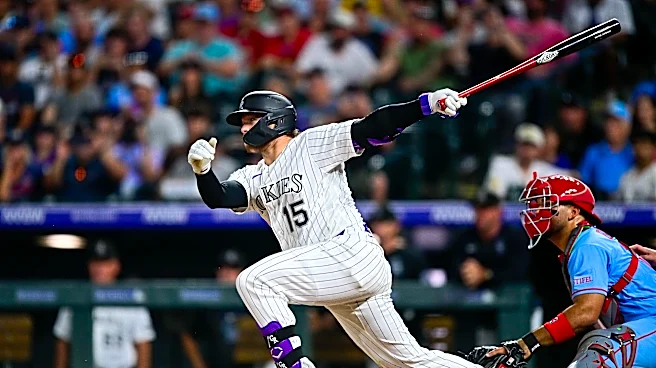
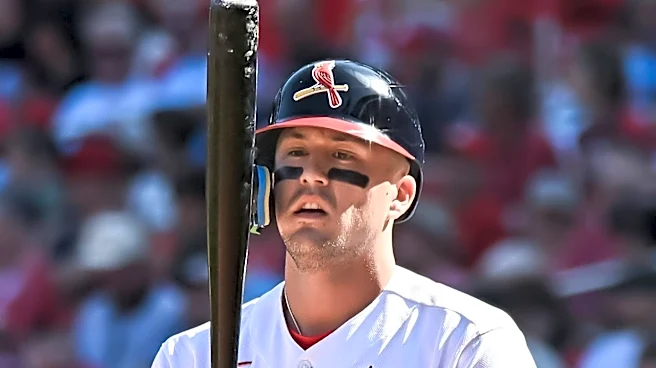
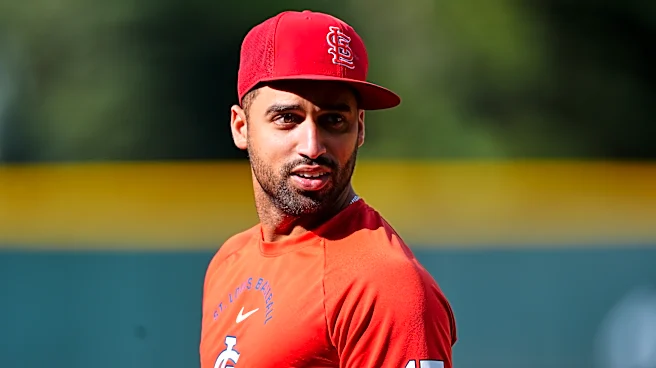
Colorado Rockies and the St. Louis Cardinals. Rincon entered the game with his hat tilted, which prompted Eddings to instruct him to adjust it. Cardinals manager Oli Marmol vehemently defended Rincon, telling Eddings to 'grow the f*** up' before being ejected from the game. Marmol criticized Eddings' action as a 'power-hungry move,' citing numerous past players who have worn their hats similarly. Eddings initially claimed a Rockies batter complained about the hat, but the batter, Hunter Goodman, denied making any such complaint, stating he was focused on the game and not the pitcher's attire. Rincon later stated that Eddings apologized to him for the incident. Following the event, several Cardinals players wore their hats tilted in solidarity.
Why It's Important?
This incident highlights ongoing tensions between MLB players, managers, and umpires regarding the interpretation and enforcement of rules, particularly those perceived as minor or stylistic. The league's decision to reprimand Eddings signals a recognition that such interventions can be disruptive and unnecessary, potentially overshadowing significant moments like a player's major league debut. For players, the ability to express individuality, even through minor stylistic choices like hat-wearing, is often valued. When umpires overstep in enforcing non-essential rules, it can lead to frustration and a perception of arbitrary authority, as evidenced by Manager Marmol's strong reaction and the Cardinals players' subsequent show of solidarity. This event underscores the need for clear guidelines on umpire discretion and a focus on rules that directly impact the integrity and flow of the game, rather than personal preferences.
What's Next?
Following MLB's communication with Doug Eddings, it is expected that umpires will exercise more restraint in enforcing minor uniform or appearance-related rules, particularly those that do not affect gameplay. The incident may prompt further internal discussions within MLB regarding umpire training and the boundaries of their authority to prevent similar confrontations. Players, having seen the league support their position, may feel more empowered to maintain their personal styles without fear of arbitrary intervention. The Cardinals' public display of solidarity suggests that teams and players will continue to push back against what they perceive as unnecessary interference from officials. While Rincon has put the incident behind him, the broader conversation about umpire conduct and player expression in MLB is likely to continue.
Beyond the Headlines
The controversy surrounding Umpire Eddings' demand extends beyond a simple hat adjustment; it touches upon the evolving culture of professional sports and the balance between tradition and individual expression. Historically, baseball has been known for its strict adherence to rules and decorum. However, modern athletes often seek to express their personalities, which can sometimes clash with traditional expectations. This incident reflects a broader societal shift where individual identity is increasingly valued. The league's intervention suggests a recognition that rigid enforcement of minor rules can alienate players and fans, potentially harming the sport's appeal. It also raises questions about the power dynamics on the field and the need for officials to adapt to contemporary sensibilities while maintaining order. The solidarity shown by the Cardinals players underscores the importance of team unity and collective action in response to perceived injustices, even in seemingly trivial matters.