




What's Happening?
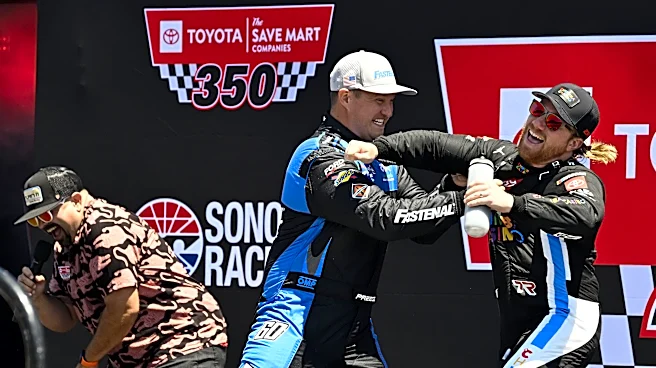
NASCAR driver Ryan Preece has openly acknowledged the need to improve his road course racing skills, specifically expressing a desire to learn the 'heel-toe' technique from renowned road course specialist Shane van Gisbergen. Preece's admission came after
a recent event at Daytona International Speedway on November 11, where he partnered with Logan Sargeant for the Navy team in a Ford Racing competition. Although Preece secured a third-place finish, he recognized that he lacked the speed to challenge the leaders, Austin Cindric and Robert Noaker, who had created a significant gap. Preece noted that he was forced to right-foot brake during the race, indicating a gap in his technique for optimal road course performance. Shane van Gisbergen has established a strong reputation for his road course prowess, having won eight Cup Series races exclusively on road and street circuits.
Why It's Important?
Ryan Preece's public commitment to improving his road course skills by learning from Shane van Gisbergen is significant for his career trajectory and for the competitive landscape of NASCAR. As road and street courses become more prevalent in the Cup Series schedule, mastering specialized techniques like heel-toe driving is crucial for drivers to remain competitive. Preece's honesty about his areas for improvement demonstrates a professional mindset that could inspire other drivers. For Ford Racing, this event served as a valuable testing ground for their drivers in identical Mustang Dark Horse R race cars, highlighting the diverse skill sets required for different track types. The emphasis on specific driving techniques underscores the technical depth of NASCAR and the continuous pursuit of marginal gains that can lead to victory. This development could also influence driver training programs and team strategies as they seek to optimize performance across all types of circuits.
What's Next?
Ryan Preece is expected to focus on developing his heel-toe driving technique and other road course specific skills in preparation for future NASCAR events. His efforts to learn from Shane van Gisbergen could involve studying van Gisbergen's race footage, seeking direct advice, or engaging in specialized training. This pursuit of skill enhancement will be critical for Preece's performance in upcoming road course races, where he has previously placed 18th at Circuit of The Americas and 14th at Watkins Glen. The broader implication is that other drivers and teams may also intensify their focus on specialized training for road courses, recognizing the competitive advantage that mastery of these techniques provides. The ongoing evolution of driver skills and car technology will continue to shape the outcomes of NASCAR races, particularly on diverse track layouts.
Beyond the Headlines
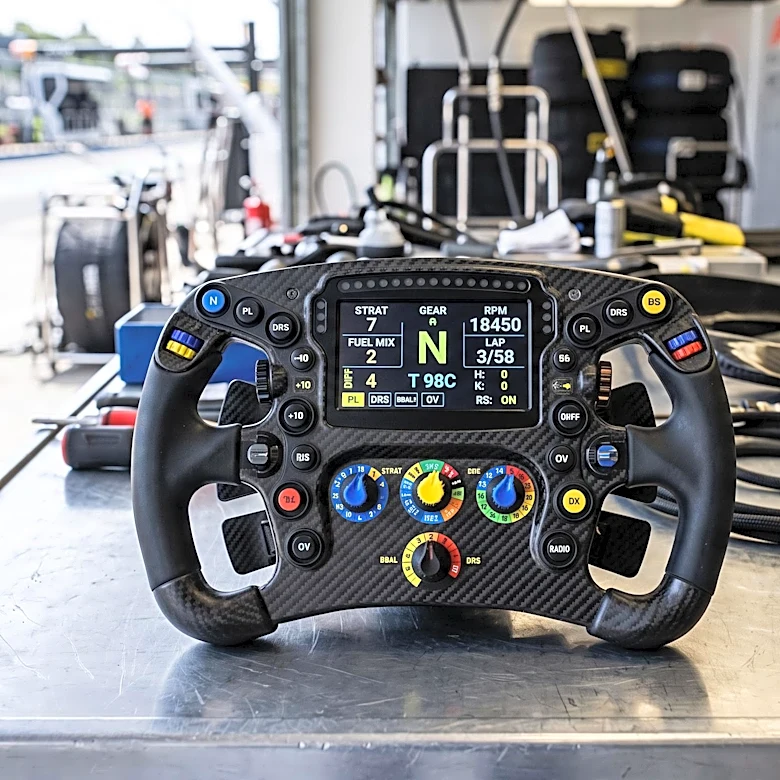
Preece's aspiration to emulate Shane van Gisbergen's heel-toe technique highlights a fascinating aspect of professional sports: the continuous learning and adaptation required even at the highest levels. It underscores that even experienced drivers can identify and address skill gaps by observing and learning from top performers. This dynamic of knowledge transfer and skill acquisition is vital for individual athlete development and for the overall progression of the sport. Furthermore, the technical nature of heel-toe driving, which involves precise coordination of braking and throttle during downshifts to maintain car balance, illustrates the intricate blend of physical prowess and mechanical understanding demanded by motorsports. This pursuit of technical excellence contributes to the high-stakes drama and competitive intensity that captivates NASCAR fans.