






What's Happening?
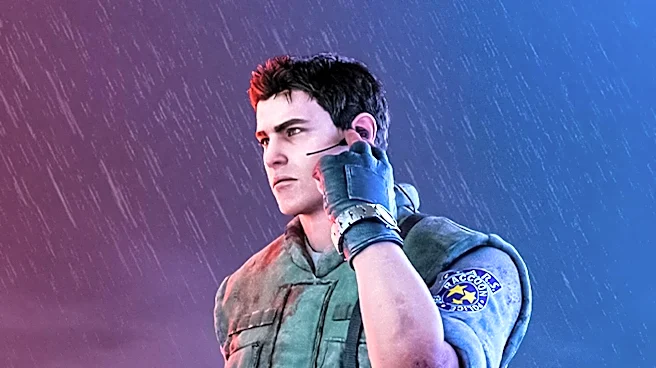
Writer-director Zach Cregger has voiced his frustration regarding the public conversation surrounding his 'Resident Evil' movie. Cregger stated that the discourse primarily focused on the film's adherence to the video game source material rather than
the movie itself. He noted that much of the discussion revolved around whether the film met various fan expectations, its use of characters, and perceived inaccuracies in the game's lore. Despite these frustrations, Cregger expressed pride in the movie, asserting that it was precisely the film he intended to make. He acknowledged that he "should have known better" about the likely fan reactions but was still surprised by the intensity of the focus on its relationship to the games. Cregger's next project is an original sci-fi film titled 'The Flood,' which will star Jennifer Lawrence.
Why It's Important?
This situation highlights a recurring challenge in the entertainment industry, particularly with adaptations of popular intellectual properties (IPs). Filmmakers often face immense pressure to satisfy established fan bases while also creating a compelling standalone cinematic experience. Cregger's experience underscores the difficulty of navigating fan expectations, which can sometimes overshadow critical reception or the artistic intent of the creators. For studios, this dynamic can influence decisions on future adaptations, potentially leading to more conservative approaches that prioritize strict adherence to source material over creative interpretation, or conversely, encouraging original content to avoid such scrutiny. The success or perceived failure of such adaptations can significantly impact box office performance and the careers of those involved, as fan engagement, both positive and negative, is a powerful force in modern media.
What's Next?
While Cregger has expressed having ideas for future 'Resident Evil' movies, his current focus is on original content, specifically the sci-fi film 'The Flood' starring Jennifer Lawrence. This shift suggests a potential move away from IP-driven projects for Cregger, at least in the immediate future, possibly to avoid similar frustrations. The broader entertainment industry will likely continue to grapple with how to best adapt beloved video games and other IPs, balancing creative freedom with fan expectations. Future adaptations may see studios and filmmakers engaging more proactively with fan communities or clearly defining their creative approach to manage expectations from the outset. The reception of 'The Flood' could also influence Cregger's career trajectory, potentially solidifying his reputation as a director of original genre films.
Beyond the Headlines
The 'Resident Evil' discourse reflects a broader cultural phenomenon where established fan communities exert significant influence over creative works. This dynamic raises questions about artistic autonomy versus audience expectations in an era of pervasive social media and instant feedback. The challenge for creators is not just to make a good film, but to navigate a pre-existing narrative and emotional investment from millions of fans. This can lead to a homogenization of adaptations, where risk-taking is minimized to appease the loudest voices, potentially stifling innovation. Conversely, it also demonstrates the power of collective fandom to shape cultural products. The conversation around Cregger's film also touches on the subjective nature of 'adaptation' itself—whether it should be a literal translation or an interpretation that captures the 'feel' of the original, as Hideo Kojima noted about Cregger's work.