





What's Happening?
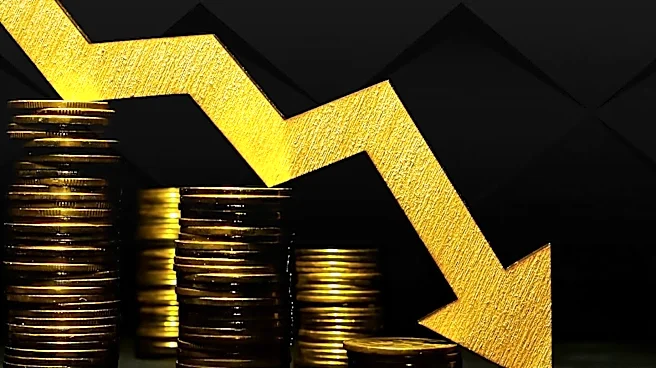
Goldman Sachs Asset Management has revised its year-end price target for gold, reducing it by $500 to $4,900 per ounce. This adjustment comes in response to shifting interest rate expectations in the market. The price of gold has experienced significant
volatility, with a 27% decline from its peak of over $5,600 in January 2026. The second quarter of 2026 marked the worst quarterly performance for gold in 13 years, with a 16% drop. The CBOE Gold Volatility Index reported the highest volatility since the Great Financial Crisis. A technical indicator known as the 'death cross' has emerged, suggesting potential further declines. This indicator occurs when the 50-day moving average falls below the 200-day moving average, often signaling a bearish trend.
Why It's Important?
The adjustment in gold's price target by Goldman Sachs reflects broader economic conditions, particularly the impact of interest rates on investment strategies. As interest rates remain high or potentially increase, the appeal of gold as a safe-haven asset diminishes. This is because higher interest rates make other investments, such as cash and U.S. Treasuries, more attractive. The strengthening U.S. dollar further compounds this effect, as a stronger dollar typically leads to lower gold prices. The shift in gold's market dynamics could influence investment portfolios, particularly those heavily weighted in commodities. Investors and financial institutions may need to reassess their strategies in light of these developments.
What's Next?
Looking ahead, the trajectory of gold prices will likely depend on future interest rate decisions by the Federal Reserve and global economic conditions. If interest rates continue to rise or remain stable, gold may face additional downward pressure. Conversely, any signs of rate cuts could potentially revive interest in gold as a hedge against inflation. Market participants will closely monitor Federal Reserve meetings and economic indicators for clues on future monetary policy. Additionally, geopolitical events and economic data releases could further influence gold's price movements.