










What's Happening?
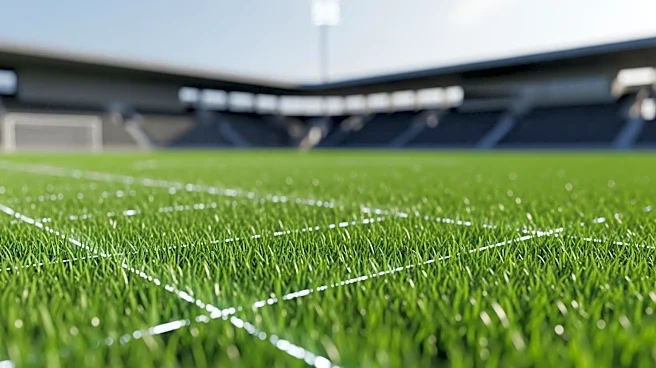
The 2026 FIFA World Cup, co-hosted by the United States, Canada, and Mexico, has seen significant advancements in grass technology to ensure high-quality playing fields. The U.S. national team, playing in Los Angeles, benefited from these improvements,
with players praising the pitch's quality. The fields, which are a mix of natural grass and synthetic fibers, were developed with the help of experts from Michigan State University and the University of Tennessee. This technology aims to provide a consistent playing surface across all venues, despite varying climates and altitudes. The initiative addresses past concerns about substandard temporary fields used in major tournaments.
Why It's Important?
The quality of playing surfaces is crucial for the performance of athletes and the overall success of the tournament. High-quality pitches allow for better gameplay, reducing the risk of injuries and ensuring fair competition. For the U.S., hosting the World Cup with top-notch facilities enhances its reputation as a capable host of major international events. This development also reflects broader trends in sports infrastructure, where technology is increasingly used to optimize conditions for athletes. The successful implementation of these fields could set a new standard for future tournaments.
What's Next?
As the World Cup progresses, the focus will remain on maintaining the quality of the pitches across all venues. The performance of these fields will be closely monitored, with feedback from players and officials likely influencing future decisions in sports turf management. The success of this initiative could lead to wider adoption of similar technologies in other sports and events, potentially transforming how playing surfaces are prepared globally.