


What's Happening?
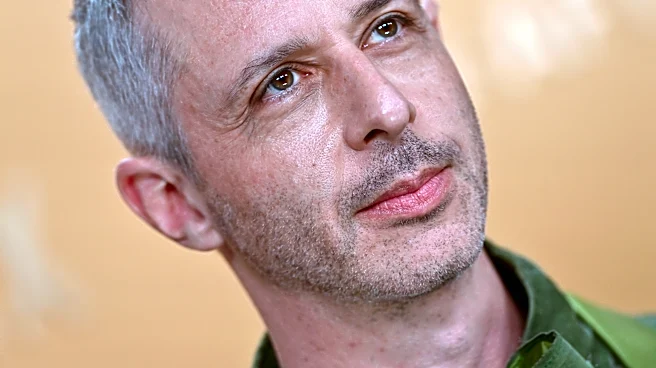
Actor Jeremy Strong's intense method acting approach is reportedly causing concern within Hollywood, potentially jeopardizing his future roles. Strong, known for his role as Kendall Roy in 'Succession,' is currently starring as Mark Zuckerberg in the
new movie 'The Social Reckoning,' directed by Aaron Sorkin, which was released on October 9, 2026. According to Radar Online, Sorkin previously noted that Strong remains in character even when cameras are not rolling, interacting on set as Zuckerberg. Industry sources indicate that while Strong's talent is undeniable, his extreme dedication to staying in character around the clock is becoming a point of contention for some productions. Directors require actors who can communicate normally and take direction, and Strong's immersive style is seen by some as potentially too demanding for the practicalities of a film set. This has led to questions about his reputation and whether filmmakers might hesitate to cast him in the future.
Why It's Important?
This situation highlights a growing tension in Hollywood between artistic dedication and practical production demands. Jeremy Strong's method acting, while praised for delivering powerful performances, is now being scrutinized for its potential to disrupt the collaborative environment of filmmaking. For the industry, this raises questions about the boundaries of method acting and its impact on set dynamics and efficiency. Directors and producers may weigh the benefits of an actor's intense immersion against the potential challenges it poses to communication, scheduling, and overall workflow. This could influence casting decisions, potentially limiting opportunities for actors who employ similar extreme methods, even if they are highly talented. The debate also touches on the evolving expectations of professionalism and collaboration in a high-pressure creative industry, where the line between artistic commitment and being perceived as 'difficult' can be thin.
What's Next?
The immediate future for Jeremy Strong will likely involve continued scrutiny of his working methods as 'The Social Reckoning' gains wider attention. Filmmakers and industry professionals will be observing how his approach impacts subsequent projects and whether his reputation for intense immersion affects his casting opportunities. Strong may face the challenge of balancing his acclaimed acting style with the industry's need for adaptable and collaborative actors. This could lead to a re-evaluation of how method acting is perceived and accommodated in Hollywood productions. Directors who have worked with him, or are considering him for future roles, may publicly or privately address the challenges or benefits of his unique process. The discussion around his methods could also influence other actors, prompting them to consider the potential career implications of their own acting techniques.
Beyond the Headlines
Beyond the immediate concerns for Jeremy Strong's career, this situation reflects a broader cultural discussion about the nature of artistic genius and its intersection with professional conduct. The entertainment industry often celebrates actors who push boundaries for their craft, yet there's an underlying expectation of professionalism and ease of collaboration. Strong's case brings to the forefront the ethical and practical considerations of extreme method acting, particularly when it extends beyond the performance itself into daily interactions on set. It raises questions about the psychological toll on actors who remain in character for extended periods and the impact on their colleagues. This development could spark a wider conversation within acting schools and professional circles about the sustainability and appropriateness of such immersive techniques, potentially leading to new industry standards or guidelines regarding actor conduct and mental well-being on set.