





What's Happening?
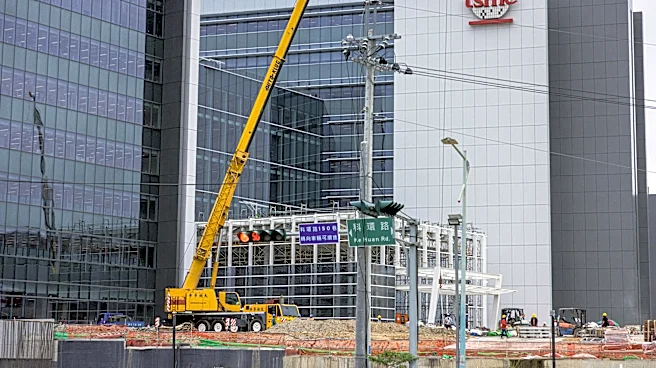
Taiwan Semiconductor Manufacturing Co. (TSMC) has received NT$167.6 billion (approximately US$5.1 billion) in government subsidies from the U.S., Germany, Japan, and China during the first nine months of the year. This financial support, detailed in the company’s
third-quarter financial report, is primarily aimed at assisting TSMC's overseas manufacturing network expansion. A significant portion of these subsidies was realized in the third quarter, with TSMC Arizona in the U.S. being a major beneficiary. The company has completed the construction of its second fab in Arizona and is in the process of installing production tools. These subsidies largely offset the costs associated with property, plants, and equipment, reflecting a global effort to attract leading chipmakers and bolster domestic semiconductor supply chains.
Why It's Important?
The substantial subsidies provided to TSMC underscore the intensifying global competition to build advanced semiconductor manufacturing capacity, particularly in the U.S. The U.S. government's investment in TSMC's Arizona operations is crucial for strengthening domestic supply chains and reducing reliance on overseas chip production, which has been highlighted as a geopolitical risk by figures like Elon Musk. By attracting TSMC to establish fabs in the U.S., the nation aims to secure a more resilient supply of critical components for various industries, including defense, automotive, and technology. This move is expected to create high-skilled jobs and foster technological innovation within the U.S., while also mitigating potential disruptions from geopolitical tensions in Asia, where the majority of chip fabrication currently occurs.
What's Next?
TSMC's second Arizona fab is currently undergoing tool installation, with operations expected to ramp up in the coming years. The continued flow of government incentives suggests an ongoing commitment from various nations, including the U.S., to support the expansion of advanced semiconductor manufacturing within their borders. This trend is likely to lead to further investments and collaborations between leading chipmakers and governments. The success of these overseas fabs will be closely watched as a benchmark for future semiconductor policy and investment strategies, particularly concerning the balance between globalized production and localized supply chain resilience.
Beyond the Headlines
The global race to onshore semiconductor manufacturing capacity, exemplified by TSMC's subsidized expansion, carries deeper implications for national security and economic sovereignty. The concentration of advanced chip production in Asia, particularly Taiwan, presents a vulnerability that governments worldwide are actively trying to address. By diversifying manufacturing locations, countries aim to safeguard against supply chain disruptions caused by natural disasters, pandemics, or geopolitical conflicts. This strategic shift could lead to a more distributed and resilient global semiconductor ecosystem, but it also raises questions about the long-term economic viability of these highly subsidized fabs once initial incentives expire and the market dynamics evolve.