
What's Happening?
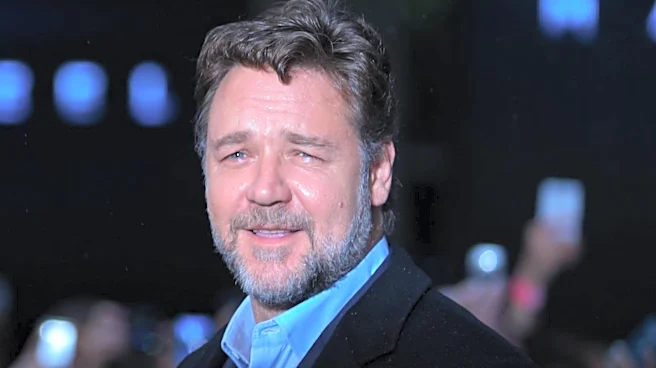
Actor Russell Crowe, at 62, has undergone a notable physical transformation for his latest film, 'The Last Druid,' which is being filmed almost entirely in Spain. Crowe is set to portray a retired warrior
who is forced to return to combat when Romans invade his village. This role required him to lose approximately 25 to 30 kilograms and engage in intense physical training. Previously, for his role in 'Nuremberg,' Crowe weighed 126 kilograms, highlighting the drastic changes he undertakes for his characters. The article also references other actors known for extreme physical transformations for roles, such as Christian Bale for 'The Machinist' and 'Batman Begins,' Jake Gyllenhaal for 'Nightcrawler' and 'Southpaw,' and Matthew McConaughey for 'Dallas Buyers Club.' These examples underscore a recurring theme in the entertainment industry where actors commit to significant bodily changes to embody their roles authentically.
Why It's Important?
The commitment of actors like Russell Crowe to extreme physical transformations for their roles underscores the dedication often required in the film industry, impacting both the artistic integrity of performances and the actors' personal health. Such transformations can generate significant media attention, contributing to a film's publicity and potentially its box office success. For audiences, these changes can enhance the believability and immersion in a character's story, making the portrayal more impactful. However, this trend also raises discussions about the pressures on actors to meet demanding physical standards, which can lead to health risks, as noted with Matthew McConaughey's weight loss for 'Dallas Buyers Club' causing health problems. The industry's embrace of such methods reflects a pursuit of realism, but it also prompts questions about the long-term well-being of performers.
What's Next?
As 'The Last Druid' continues filming, the public will likely see more promotional material showcasing Russell Crowe's transformation, which could build anticipation for the film's release. The film's success may further solidify Crowe's reputation for intense method acting and physical dedication. In the broader industry, the ongoing trend of actors undergoing significant physical changes for roles is expected to continue, driven by critical acclaim and audience reception. However, there may also be increased scrutiny and discussion regarding the health implications and ethical considerations of such practices. Actors and production companies might face more questions about the support systems in place to ensure the well-being of performers undertaking these demanding physical challenges.
Beyond the Headlines
The extensive physical transformations undertaken by actors like Russell Crowe for their roles delve into deeper ethical and psychological dimensions within the entertainment industry. Beyond the immediate health risks, these changes can blur the lines between the actor's personal identity and the character they portray, potentially leading to psychological strain. The industry's glorification of such extreme methods might also set unrealistic expectations for aspiring actors, fostering a culture where physical alteration is seen as a prerequisite for serious dramatic roles. This raises questions about the sustainability of such practices and whether the pursuit of authenticity on screen outweighs the potential long-term physical and mental health costs for performers. It also highlights the broader societal fascination with body image and the lengths individuals are willing to go to achieve a desired aesthetic, even if temporary and for professional purposes.