







What's Happening?
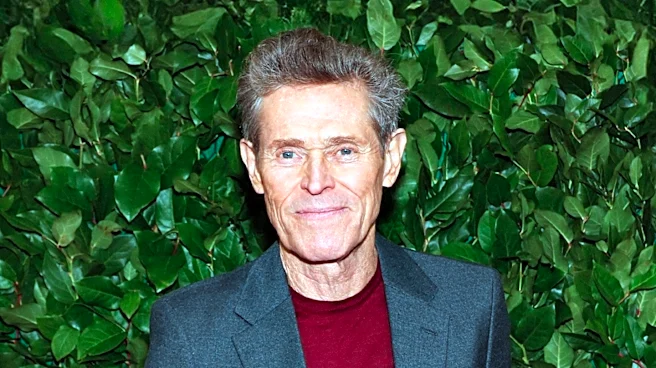
Willem Dafoe, a renowned actor, has expressed that he finds significant pleasure in simple, everyday tasks such as washing dishes and caring for animals on his farm in Italy. In a podcast interview on 'Wild Card with Rachel Martin,' Dafoe elaborated on how
these activities, including putting his farm animals to sleep at night, provide him with a sense of contentment and allow him to live in the simplicity of the moment. He also shared his deep admiration for the dedication of the individuals who work with him on the farm, highlighting their natural commitment to their tasks and their connection to the rhythms of nature. Dafoe described a particularly gratifying scene where 35 goats and sheep rush towards him to have their enclosure doors opened, underscoring the direct and fulfilling interactions he experiences with his farm life. This perspective offers insight into the actor's personal values, emphasizing a grounded approach to life despite his professional accolades.
Why It's Important?
Dafoe's reflections on finding happiness in mundane tasks and farm life offer a counter-narrative to the often-glamorized perception of celebrity existence. This perspective is important as it humanizes public figures, demonstrating that fulfillment can stem from simple, tangible activities rather than solely from professional achievements or public recognition. For society, it reinforces the value of mindfulness and connection to nature, potentially inspiring individuals to seek contentment in their own daily routines and environments. In an era where professional success and external validation are heavily emphasized, Dafoe's viewpoint underscores the importance of internal peace and the satisfaction derived from basic responsibilities. His admiration for farm workers also highlights the dignity of labor and the often-overlooked connection between humans and the natural world, promoting a greater appreciation for such roles.
What's Next?
While the article primarily focuses on Dafoe's personal reflections, his continued public presence and acting career suggest that these personal philosophies may subtly influence his future professional choices. His emphasis on authenticity and grounded experiences could lead him to select roles that resonate with these values, or to engage in projects that explore themes of simplicity, nature, or the human condition. Furthermore, his candid sharing of these insights might encourage other public figures to discuss their own methods of maintaining balance and finding joy outside of their demanding careers. This could contribute to a broader cultural conversation about well-being and the pursuit of happiness beyond conventional measures of success, potentially influencing public discourse on lifestyle choices and mental health.
Beyond the Headlines
Beyond the immediate narrative, Dafoe's comments touch upon deeper psychological and cultural implications. His struggle to ask for help, which he attributes to a traditional idea of masculinity associating independence with self-sufficiency, reveals a common societal challenge. His farm life, however, forces him to confront these limits and learn from others, suggesting a path towards healthier interdependence. This aspect highlights the evolving understanding of masculinity and the importance of vulnerability. Furthermore, his reflection on professional recognition—acknowledging the human desire for validation but cautioning against believing it's the sole source of happiness—speaks to the broader societal pressure for external approval. Dafoe's emphasis on human connection and shared experiences as essential for a good life offers a profound ethical and cultural message, advocating for community and mutual support over individualistic pursuits.