



What's Happening?
Levi Strauss & Co. is expanding its 'Wear Longer' program across the U.S., offering in-store repair services and sewing workshops to encourage customers, particularly Generation Z, to mend and maintain their clothing. This initiative aims to address the growing
interest among young consumers in sustainability and thrift shopping. As part of the program, Levi's has developed hand-stitching courses for high school students, teaching essential repair skills such as sewing on buttons, hemming, patching holes, and fixing tears. Paul Dillinger, Levi's head of global design innovation, stated that the company believes in empowering customers with the skills to extend the life of their garments. This move comes as the fashion industry faces increasing pressure to reduce its environmental impact, particularly concerning textile waste. Other brands like Uniqlo, Zara, and Primark are also implementing similar repair and customization services to appeal to this demographic.
Why It's Important?
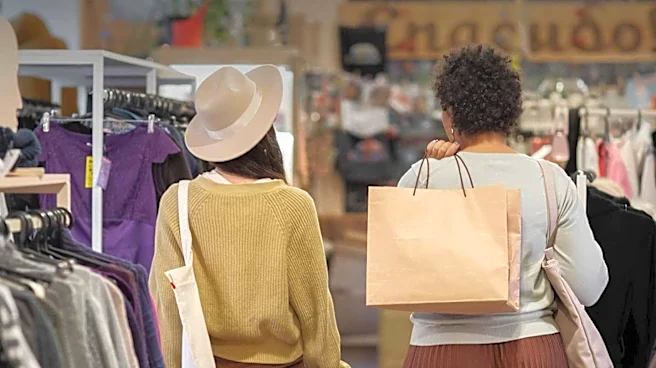
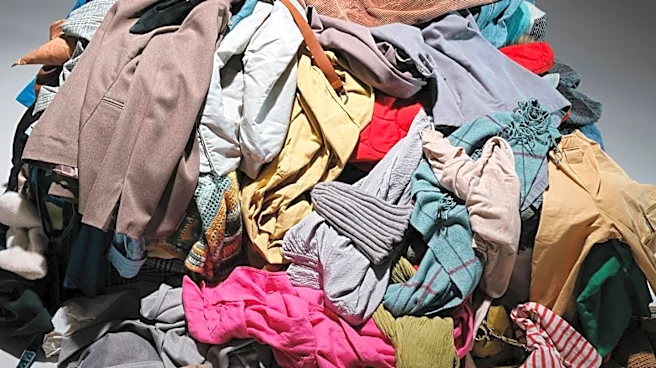
This initiative by Levi Strauss & Co. is significant as it directly responds to evolving consumer values, especially among Generation Z, who prioritize sustainability and cost-saving. By offering repair services and educational workshops, Levi's is not only enhancing its brand image as environmentally conscious but also potentially fostering long-term customer loyalty. The fashion industry is a major contributor to environmental pollution and textile waste, with an estimated equivalent of a garbage truck's worth of fabric waste dumped or incinerated every second globally. Programs like 'Wear Longer' can help mitigate this issue by extending the lifespan of clothing, thereby reducing the demand for new production and minimizing waste. This approach also taps into the booming pre-owned clothing market, which is growing faster than retail apparel sales in the U.S., driven by Gen Z's preferences for secondhand items and a rejection of materialism. For Levi's, this strategy could translate into a competitive advantage by aligning with consumer ethics and promoting a more circular economy within the apparel sector.
What's Next?
The expansion of Levi's 'Wear Longer' program suggests a continued focus on integrating sustainability into its business model. Other fashion retailers are likely to observe the success and impact of such initiatives, potentially leading to a broader adoption of in-store repair services and educational workshops across the industry. The challenge for these programs will be to scale effectively and become commercially viable, as manufacturing new garments often costs less than maintaining existing ones. Companies like H&M have highlighted the economic obstacles, advocating for tax incentives to make repair and resale more profitable. Future developments may include increased collaboration between brands and policymakers to create a more supportive economic environment for sustainable practices. Consumers can expect more opportunities to learn repair skills and access mending services, further normalizing the 'fix it, don't ditch it' mentality in fashion.
Beyond the Headlines
The 'Wear Longer' program by Levi Strauss & Co. touches upon deeper cultural and ethical shifts in consumer behavior and corporate responsibility. It signifies a move away from the fast-fashion consumption model towards a more mindful and sustainable approach to clothing. This initiative challenges the traditional retail paradigm where sales are driven solely by new purchases, instead promoting a product-as-service model. Ethically, it empowers consumers to be more responsible for their environmental footprint and fosters a sense of craftsmanship and value for their possessions. Culturally, it revives traditional skills like sewing and mending, which were once common but have largely been lost in modern society. The long-term implication could be a fundamental redefinition of what it means to own and use clothing, shifting from disposable trends to durable, repairable items. This could also lead to a greater appreciation for the labor and resources involved in clothing production, fostering a more respectful relationship between consumers and their garments.