





What's Happening?
The vertical farming industry is moving beyond simply proving its capability to grow crops, now prioritizing efficiency, consistency, and economic viability. Discussions at the 7th Vertical Farming World Congress in London highlighted a more grounded
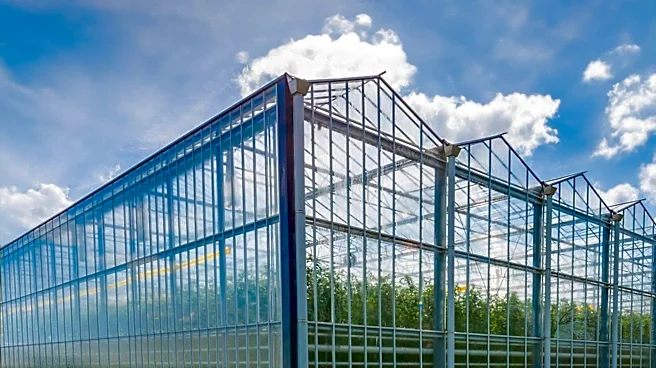
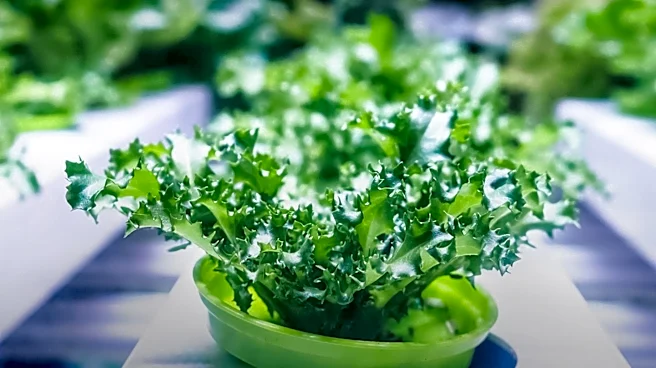
approach, with a focus on optimizing yield, labor, energy consumption, and cost per kilogram. Companies like AgroUrbana reported significant improvements in lettuce yield and reductions in labor requirements. There's also a growing interest in specialized applications beyond leafy greens, including fruiting crops like strawberries and tomatoes, and the use of vertical farming for seedling production. Some companies are exploring hybrid models, combining vertical growing with greenhouses, and others are manipulating plant responses in controlled environments to increase specific compounds for non-food applications. The industry is also emphasizing the need for transparent data sharing and benchmarking to understand performance compared to industry averages.
Why It's Important?
This shift in the vertical farming industry is crucial for its long-term sustainability and broader adoption in the U.S. By focusing on efficiency and economic viability, vertical farms can become more competitive with traditional agriculture, potentially leading to more affordable and accessible locally grown produce. The exploration of fruiting crops and specialized plant compounds opens new markets and revenue streams, diversifying the industry beyond its current reliance on leafy greens. For the U.S., this could mean enhanced food security, reduced reliance on imported produce, and a more resilient food supply chain, especially in urban areas or regions with challenging climates. The emphasis on data sharing and benchmarking will foster innovation and best practices, driving the industry towards greater maturity and profitability. Furthermore, the development of hybrid models and specialized applications could create new job opportunities in agricultural technology and research.
What's Next?
The vertical farming industry is expected to continue its trajectory towards greater specialization and efficiency. This will likely involve further research and development into crop genetics tailored for controlled environments, advanced automation, and energy-saving technologies. We can anticipate more partnerships between vertical farming companies and traditional agricultural businesses, particularly in areas like seedling production. The focus on data transparency will lead to the establishment of industry-wide benchmarks, allowing companies to better assess their performance and identify areas for improvement. As the technology matures, there may be increased investment in larger-scale commercial operations and a wider variety of produce available from vertical farms. The development of non-food applications, such as plant-derived compounds for pharmaceuticals or cosmetics, could also become a significant growth area.
Beyond the Headlines
The evolution of vertical farming has deeper implications for how society views and produces food. The move towards efficiency and specialized crops challenges the traditional agricultural paradigm, which often prioritizes volume over resource optimization. This industry's growth could lead to a re-evaluation of land use, water consumption, and environmental impact in food production. Ethically, it raises questions about the role of technology in nature and the potential for genetically modified crops specifically designed for controlled environments. Culturally, it could foster a greater appreciation for precision agriculture and the scientific advancements that enable food production in unconventional settings. The ability to grow food locally and sustainably, even in challenging conditions, could also empower communities and reduce their vulnerability to global supply chain disruptions, contributing to a more resilient and equitable food system.