




What's Happening?
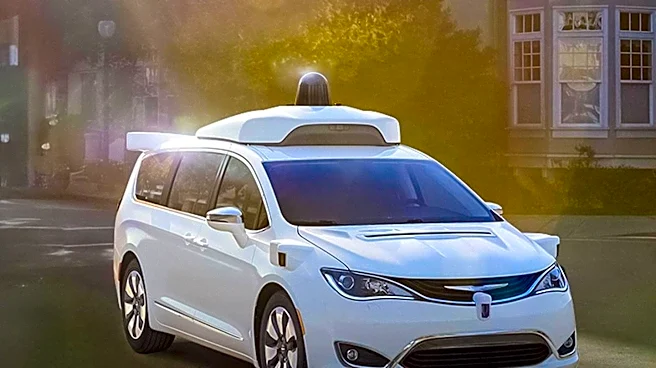
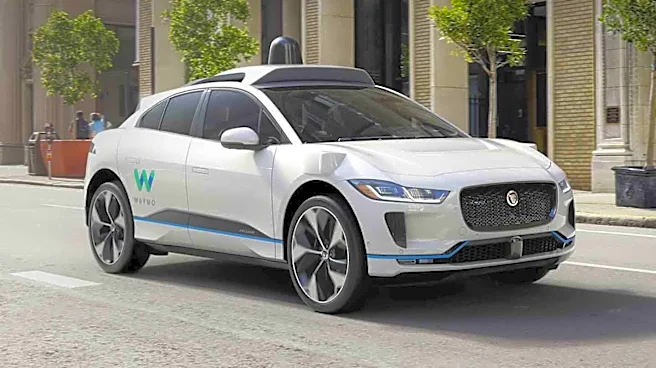
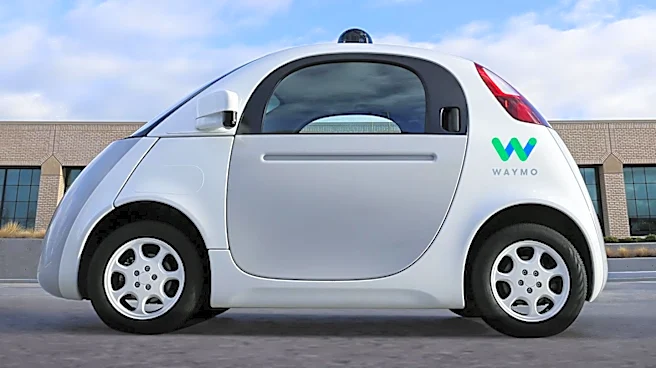
Waymo is preparing to launch its driverless ride service for the public in San Diego, with the company aiming to begin picking up customers in the next few months. Autonomous vehicles have already been operating in areas like Hillcrest, primarily transporting
Waymo employees to train the technology on local streets. Waymo Communications Manager Sandy Karp stated that the company has been training its 'Waymo driver' to learn San Diego streets like a local. The service will function similarly to other ride-share platforms, but without a human driver. Karp highlighted that Waymo vehicles are not susceptible to human errors such as fatigue or impairment. Passengers can initiate rides with a button and interact with the robotaxi. The vehicles utilize cameras capable of seeing up to 500 meters away and can adjust routes or pull over safely if needed. The state of California has approved autonomous vehicle operations in certain cities, though public opinion remains divided.
Why It's Important?
The launch of Waymo's driverless ride service in San Diego marks a significant step in the expansion of autonomous vehicle technology in the U.S. This development has the potential to transform urban transportation, offering new mobility options and potentially reducing traffic accidents attributed to human error. For the technology industry, it represents a critical phase in validating the safety and efficiency of self-driving cars in complex urban environments. Economically, it could create new job sectors in maintenance and oversight, while potentially displacing traditional ride-share and taxi drivers. Public policy will also be impacted, as cities and states grapple with regulations, infrastructure adaptations, and public acceptance of autonomous vehicles. The success or challenges faced by Waymo in San Diego will likely influence the adoption and regulatory frameworks for similar services across other U.S. cities, shaping the future of urban transit and smart city initiatives.
What's Next?
Waymo has not yet announced an exact date for the public launch of its driverless ride service in San Diego, but the company anticipates beginning customer pickups within the next few months. The company will continue to refine its technology based on experiences in San Diego and other cities, addressing issues such as vehicles blocking traffic or entering construction sites. Each incident provides data for improvements across Waymo's entire fleet. The public's reception and regulatory responses will be crucial in determining the pace and scope of expansion. As the service rolls out, there will likely be ongoing discussions and adjustments regarding safety protocols, operational guidelines, and public education to foster trust in autonomous transportation. The performance of Waymo's vehicles in San Diego will serve as a key indicator for future deployments in other U.S. metropolitan areas.
Beyond the Headlines
The introduction of driverless ride services like Waymo's in San Diego raises deeper societal and ethical questions beyond mere technological advancement. The shift towards autonomous vehicles challenges traditional notions of human control and responsibility, particularly in the event of accidents. There are ethical dilemmas concerning programming decisions in unavoidable crash scenarios and the potential impact on employment for professional drivers. Culturally, the widespread adoption of self-driving cars could alter urban planning, public spaces, and individual relationships with transportation, potentially leading to less car ownership and more reliance on shared autonomous fleets. Furthermore, data privacy and cybersecurity become paramount, as these vehicles collect vast amounts of information and are vulnerable to digital threats. The long-term integration of autonomous vehicles will necessitate a re-evaluation of legal frameworks, insurance models, and societal norms to fully adapt to this transformative technology.