




What's Happening?
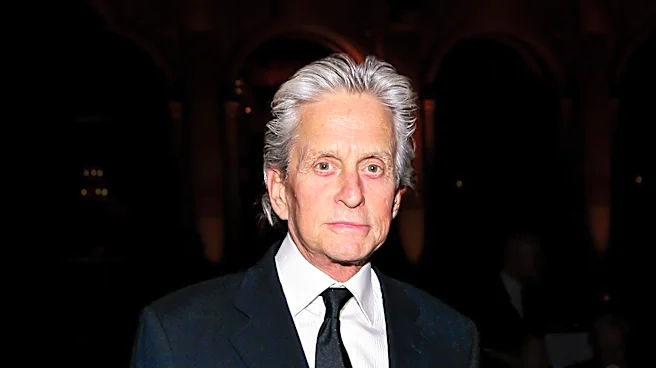
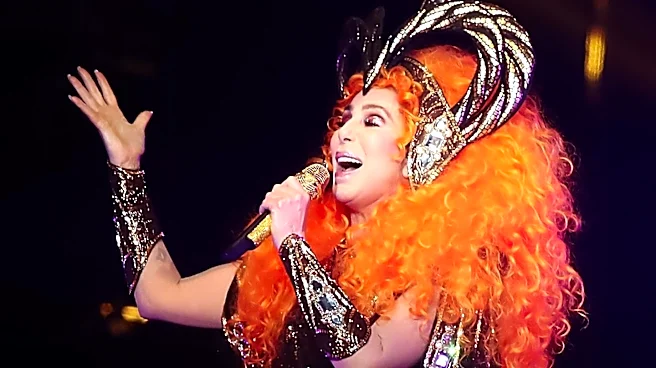
During an appearance on 'The Graham Norton Show,' actor Michael Douglas expressed his belief that Glenn Close should have won the 1988 Best Actress Oscar for her role in 'Fatal Attraction,' rather than Cher, who won for 'Moonstruck.' Douglas stated that Close's
performance in 'Fatal Attraction' remains one of 'the greatest performances of all time.' He recalled that Close was nominated for her fourth Oscar that year. When host Graham Norton confirmed Cher's win was for 'Moonstruck,' Douglas responded with 'I know. That’s what we all said,' prompting laughter from the other celebrity guests. Cher ultimately beat out Close, Holly Hunter ('Broadcast News'), Sally Kirkland ('Anna'), and Meryl Streep ('Ironweed') for the award. Close, who has been nominated for eight Oscars but has never won, quipped that she is receiving an honorary Oscar at the Governors Awards in November because the Academy members 'probably don’t want to feel guilty anymore.'
Why It's Important?
Michael Douglas's comments reignite a long-standing debate within Hollywood about the fairness and accuracy of Academy Award selections, particularly in competitive categories. His public statement, made decades after the event, highlights the enduring impact of perceived snubs and the subjective nature of artistic recognition. For Glenn Close, who has a distinguished career with multiple nominations but no competitive wins, such advocacy from a peer like Douglas underscores the sentiment among some in the industry that her work has been undervalued by the Academy. This discussion also brings attention to the specific performances of both Close in 'Fatal Attraction' and Cher in 'Moonstruck,' prompting a re-evaluation of their respective merits and cultural impact from that era. It also reflects the ongoing conversation about how actors and their contributions are judged and remembered within the film industry's historical context.
What's Next?
While Douglas's comments are unlikely to change the historical outcome of the 1988 Oscars, they may spark renewed discussion and debate among film enthusiasts and critics regarding the merits of the performances in question. Glenn Close is set to receive an honorary Oscar at the Governors Awards in November, which may be seen by some as a form of belated recognition for her extensive career and contributions to cinema, potentially addressing the 'guilt' she jokingly mentioned. Cher's representatives have been contacted for comment, but no immediate response was available. The remarks could also lead to retrospective analyses of the 1988 Oscar race, with film historians and fans re-examining the performances of all nominees. This kind of public commentary from influential figures like Douglas often keeps past cinematic achievements and perceived injustices alive in the cultural conversation.
Beyond the Headlines
This incident delves into the deeper complexities of awards season and the subjective nature of artistic judgment. Oscar wins often become definitive markers in an actor's career, shaping public perception and future opportunities. Douglas's remarks highlight how these decisions, even decades later, can still be viewed as contentious by those within the industry. It also touches upon the broader narrative of 'snubs' in Oscar history, where critically acclaimed performances or careers go unrewarded by the Academy. This ongoing discussion reflects the tension between popular appeal, critical consensus, and the specific tastes of Academy voters. Furthermore, it underscores the enduring power of iconic roles like Alex Forrest in 'Fatal Attraction' and Loretta Castorini in 'Moonstruck' to provoke strong opinions and remain subjects of debate, illustrating how film performances can leave a lasting impression on both audiences and industry peers.