






What's Happening?
Chris Miller, author of 'Chip War' and a leading semiconductor expert, has advised India's Semicon 2.0 strategy to broaden its focus beyond just chip fabrication. In an exclusive interview with ANI, Miller emphasized the importance of concentrating on high-value
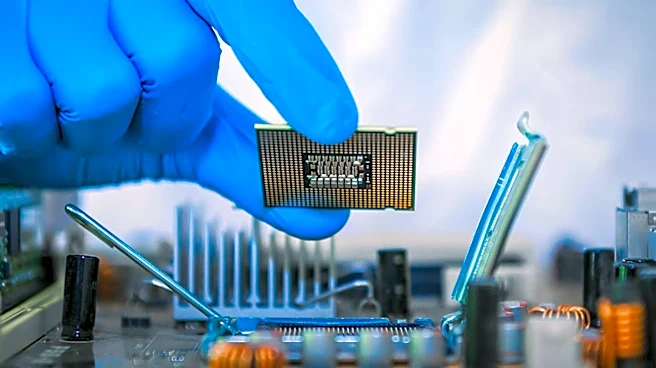
areas within the semiconductor ecosystem, specifically highlighting chip design, equipment, and advanced packaging. He noted India's existing strengths in chip design, with major hubs like Hyderabad and Bengaluru already hosting thousands of designers for both Indian and multinational corporations. Miller stressed that while fabrication is crucial, many governments tend to overemphasize this stage, overlooking other segments that contribute significantly to the industry's value. He also pointed out that the artificial intelligence (AI) boom is reshaping the chip industry, shifting focus from smartphones and computers to data center applications and advanced packaging solutions tailored for AI workloads.
Why It's Important?
Miller's recommendations are significant for India's strategic positioning in the global semiconductor market. By advocating for a focus on design and advanced packaging, he suggests a pathway for India to leverage its intellectual capital and create higher value within the supply chain, rather than solely competing in the capital-intensive fabrication sector. This approach could lead to greater economic returns and foster innovation, as design and packaging are becoming increasingly critical for enhancing semiconductor performance, especially with the demands of AI. For the U.S. and global semiconductor industry, India's strategic development in these areas could diversify the supply chain, reduce reliance on a few key regions, and potentially foster new partnerships and collaborations. This shift could also influence global investment patterns, as companies seek to capitalize on India's growing expertise in design and advanced packaging, thereby impacting the competitive landscape of the semiconductor industry worldwide.
What's Next?
Following Chris Miller's advice, India's Semicon 2.0 strategy is likely to refine its focus to enhance capabilities in chip design, equipment manufacturing, and advanced packaging. This could involve increased government incentives for research and development in these areas, as well as initiatives to attract foreign investment and expertise. India may also seek to strengthen its integration into international semiconductor value chains, drawing lessons from successful semiconductor economies like South Korea and Taiwan, which initially focused on deep integration before developing specialized technological differentiation. The AI boom will continue to drive demand for advanced semiconductor solutions, prompting India to align its strategy with these evolving technological needs. This strategic pivot could lead to the development of specialized capabilities that bolster India's position in the global semiconductor ecosystem, potentially fostering new collaborations and competition in the coming years.
Beyond the Headlines
The emphasis on design and advanced packaging for India's semiconductor strategy highlights a broader global trend: the increasing complexity and specialization within the semiconductor industry. As chip manufacturing becomes more intricate and costly, countries are seeking niches where they can excel and add significant value. This strategic shift moves beyond the traditional focus on raw manufacturing capacity to intellectual property and sophisticated engineering. For the U.S., this could mean a more robust and diversified global supply chain, potentially mitigating risks associated with geopolitical tensions and concentrated production. It also underscores the critical role of human capital and specialized skills in the tech sector, as design and packaging require highly skilled engineers and researchers. The long-term implications include a more resilient and innovative global semiconductor ecosystem, where different nations contribute distinct strengths, fostering both competition and collaboration in the race for technological advancement.