








What's Happening?
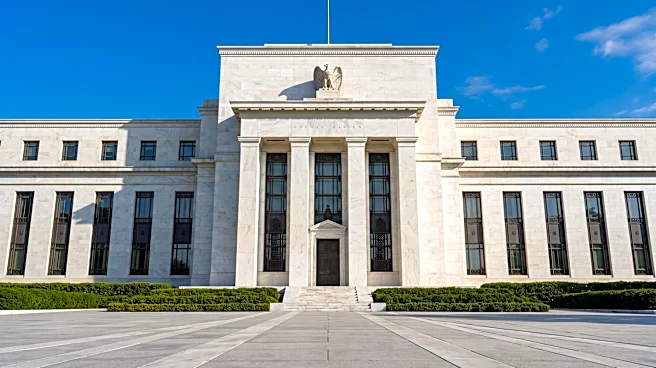
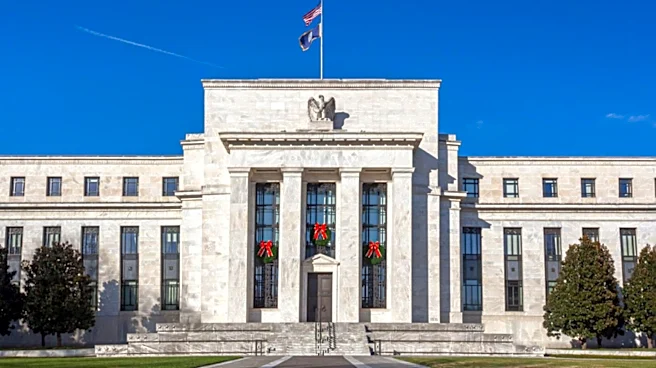
The Federal Reserve Bank of New York's Open Market Trading Desk has temporarily paused its reserve management purchases (RMPs) of Treasury bills. This decision stems from an assessment that reserve demand remained largely unchanged, while the forecast
for reserve supply increased materially due to updated guidance for the Treasury General Account (TGA) level. Money market conditions, including the effective federal funds rate and Treasury repo rates, have consistently traded near the interest rate on reserve balances (IORB), indicating that reserves are ample. The Desk noted that significant Treasury bill issuance in July and August, totaling approximately $400 billion, was absorbed with only modest upward pressure on repo rates, contrasting with conditions in the fourth quarter of the previous year. This suggests a robust capacity within the money markets to handle such issuance without disrupting the ample reserve framework. The Federal Open Market Committee (FOMC) directs the Desk to increase System Open Market Account holdings of securities, including Treasury bills, to maintain an ample level of reserves when appropriate. The Desk's decisions on RMPs are informed by reserve demand, reserve supply forecasts, and current and expected money market conditions.
Why It's Important?
This pause in Treasury bill purchases by the Federal Reserve Bank of New York signals the central bank's confidence in the current ample level of reserves within the U.S. financial system. For U.S. industries and economic stakeholders, this indicates a stable monetary environment where liquidity is sufficient, potentially reducing borrowing costs and supporting economic activity. The ability of money markets to absorb substantial Treasury bill issuance without significant rate pressure suggests underlying market resilience, which is crucial for government financing and overall financial stability. If the Fed were to continue purchasing bills when reserves are already ample, it could inadvertently push short-term rates too low, potentially distorting market signals or encouraging excessive risk-taking. The Fed's careful management of reserve levels aims to maintain effective interest rate control, a key principle for monetary policy implementation, ensuring that the federal funds rate remains within the FOMC's target range. This approach helps to minimize the cost of debt to taxpayers and supports the broader financial system, which are vital for sustained economic health.
What's Next?
The Federal Reserve Bank of New York will continue to monitor market conditions closely, particularly how the market responds to potential future rounds of significant net bill issuance, such as an expected one in October. The Desk recently distributed the latest Senior Financial Officer Survey (SFOS) to gauge any changes in reserve demand. They will also remain attentive to any signs of pressures in the repo market. The Desk has emphasized that RMPs are not on a preset course and will be adjusted as evolving conditions warrant, to ensure reserves remain within the ample range. While the current approach is securities-led, the Fed acknowledges that other central banks utilize repo-led approaches, and the choice of implementation is based on suitability to their respective jurisdictions. Future adjustments to RMPs will depend on the ongoing assessment of reserve demand, supply forecasts, and money market dynamics, ensuring the Fed can continue to effectively implement monetary policy and maintain financial stability.
Beyond the Headlines
The Federal Reserve's decision to pause Treasury bill purchases highlights a broader strategic consideration in monetary policy implementation: balancing the need for ample reserves with the potential for market distortions. The comparison with repo-led approaches adopted by other advanced-economy central banks, such as the Bank of England and the European Central Bank, underscores the diverse methods central banks employ to achieve similar goals of financial stability and interest rate control. The choice between a securities-led and a repo-led approach has implications for the central bank's balance sheet composition and duration, as well as the reliance on market intermediation versus direct liquidity provision. While both approaches aim to supply necessary reserves, a repo-led framework might lead to slightly smaller reserve demand as banks anticipate readily available central bank liquidity. The discussion also touches upon the importance of central clearing for standing repo operations, which could enhance counterparties' ability to intermediate liquidity, especially in a more repo-reliant framework. These considerations reflect the ongoing evolution of central banking tools and strategies in response to changing financial landscapes and institutional realities.