






What's Happening?
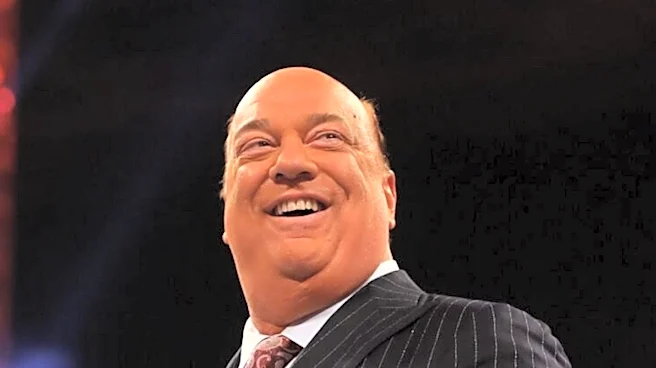
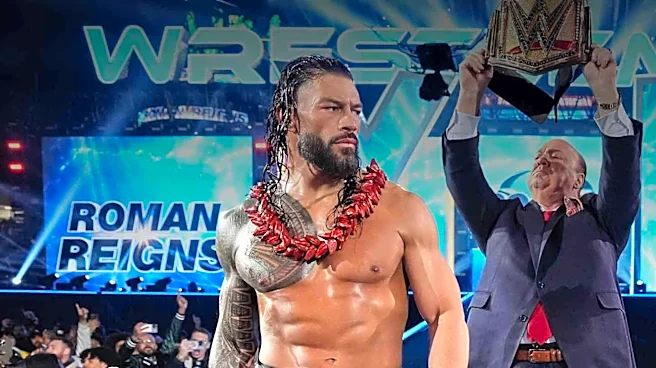
Paul Heyman, a prominent figure in WWE, recently offered his perspective on the character of former WWE CEO and Chairman Vince McMahon. In an interview with Graham Bensinger, Heyman stated that he does not believe McMahon ever considered himself a 'good
man' and that McMahon did not seem to care about such a judgment. Heyman elaborated that McMahon's self-perception did not include being placed on Earth to be a good man. Heyman, who worked under McMahon for a significant portion of his career, also described the challenge of keeping pace with McMahon's ethics and vision, calling it 'impossible' due to McMahon's relentless work ethic, which Heyman found both 'inspiring' and 'paralyzing.'
Why It's Important?
Heyman's candid remarks provide a rare and significant insight into the personality and leadership style of Vince McMahon, a highly influential but often enigmatic figure in the entertainment industry. McMahon's impact on professional wrestling is undeniable, and Heyman's observations from an insider's perspective offer a nuanced view beyond public perception. The description of McMahon as someone unconcerned with being a 'good man' and possessing an 'impossible' work ethic highlights the demanding and singular vision that drove WWE's growth. This perspective is crucial for understanding the corporate culture and decision-making processes that shaped a global entertainment empire, and it may influence how McMahon's legacy is perceived by fans, industry professionals, and historians.
What's Next?
Heyman's comments are likely to spark further discussion and analysis within the professional wrestling community and among those interested in corporate leadership. While McMahon is no longer at the helm of WWE, his influence remains a subject of ongoing debate and scrutiny. Heyman's statements could encourage other former employees or associates to share their own experiences, potentially contributing to a more comprehensive public understanding of McMahon's character and management approach. These insights are valuable for anyone studying the intersection of business, entertainment, and leadership, particularly in a field as unique as professional wrestling.
Beyond the Headlines
The deeper implications of Heyman's assessment touch upon the nature of leadership and success in high-stakes environments. McMahon's alleged disregard for being perceived as a 'good man' suggests a focus on outcomes and ambition above conventional ethical considerations, a trait sometimes associated with highly successful, transformative leaders. This raises questions about whether such an approach is necessary for achieving monumental success in competitive industries. Furthermore, Heyman's description of McMahon's work ethic as 'inspiring' yet 'paralyzing' illustrates the double-edged sword of intense leadership, where drive can motivate but also overwhelm those around them. This dynamic offers a psychological lens through which to view the pressures and demands placed on individuals within such powerful organizational structures.