






What's Happening?
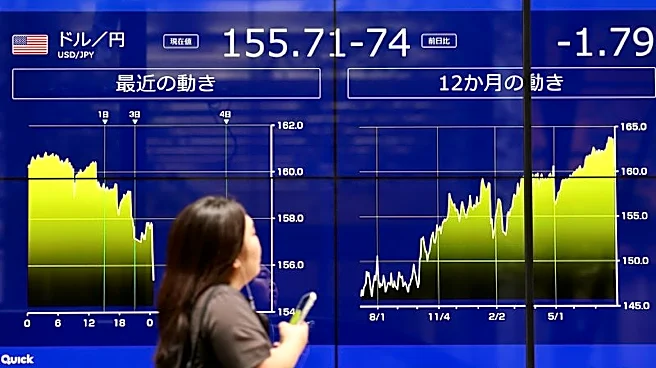
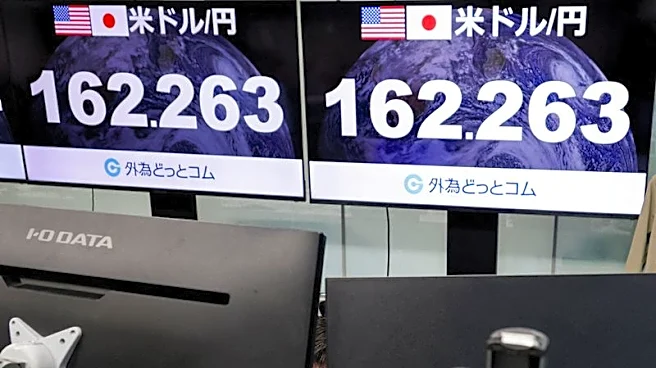
The Japanese yen is at the center of financial market discussions as speculation mounts over potential joint intervention by Japan and the United States to support the yen. This intervention is seen as a response to the yen's recent weakness, which has
been a significant driver of currency market movements. The EUR/USD pair is currently testing a long-standing downtrend resistance, influenced by the yen's fluctuations. The intervention, if confirmed, would mark the first coordinated effort by Japan and the US in decades. The market is closely watching for any announcements from Japan regarding this intervention, as it could lead to further artificial downside pressure on the US dollar, thereby affecting the EUR/USD exchange rate.
Why It's Important?
The potential intervention in the yen market is significant as it could alter the dynamics of currency trading, particularly affecting the EUR/USD pair. A successful intervention could stabilize the yen, impacting global trade balances and financial markets. For the US, a weaker dollar could influence export competitiveness and inflation dynamics. The intervention also highlights the interconnectedness of global economies and the potential for coordinated policy actions to address currency volatility. Market participants, including traders and policymakers, are keenly observing these developments, as they could set precedents for future currency interventions and impact monetary policy decisions.
What's Next?
If the intervention is confirmed, markets will likely see increased volatility as traders adjust their positions. The focus will shift to the sustainability of the intervention's effects and whether further actions will be necessary. Additionally, upcoming US economic data, such as the non-farm payrolls report, will be crucial in determining the dollar's trajectory. Policymakers in both Japan and the US will need to assess the intervention's impact on their respective economies and consider any further measures to stabilize their currencies. The situation remains fluid, with potential implications for global financial stability.