



What's Happening?
Ken Kendrick, the owner of the Arizona Diamondbacks, has openly stated his intention to reduce the team's payroll in 2027. This announcement comes as the Diamondbacks' general manager, Mike Hazen, is actively seeking a controllable starting pitcher. The
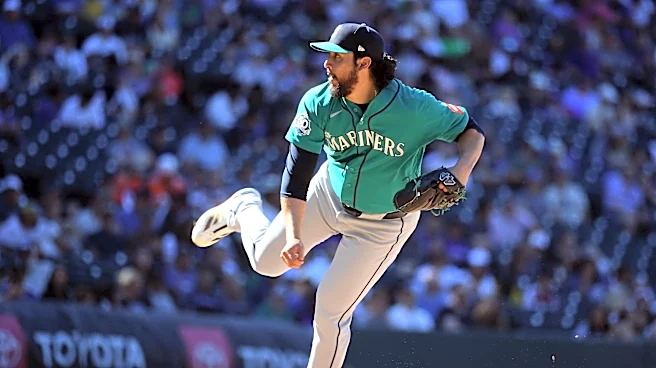
financial constraint imposed by Kendrick's threat suggests that signing a high-cost free-agent pitcher may not be a viable option for the team. This situation creates a potential opportunity for trade discussions, particularly with teams like the Seattle Mariners, who possess a surplus of starting pitching talent. The Mariners have several pitchers under control for multiple years, making them an attractive partner for the Diamondbacks given their owner's stated financial outlook.
Why It's Important?
This development is significant for the Arizona Diamondbacks and the broader Major League Baseball landscape. A reduction in payroll could impact the team's ability to compete for top-tier talent, potentially affecting their on-field performance and long-term competitiveness. For players, it signals a tightening market for contracts, especially for those seeking lucrative deals. From a business perspective, it reflects the ongoing financial considerations within professional sports, where ownership decisions directly influence team strategy and player acquisitions. The situation also highlights the dynamic nature of team building, forcing general managers to explore alternative avenues, such as trades, to address roster needs under budgetary restrictions. This could lead to more creative and complex trade scenarios across the league.
What's Next?
The Diamondbacks' general manager, Mike Hazen, will likely intensify efforts to acquire a controllable starting pitcher through trades rather than free agency, given Ken Kendrick's payroll directive. This could lead to increased trade activity between the Diamondbacks and teams with pitching surpluses, such as the Seattle Mariners. Potential trade targets from the Mariners could include pitchers like Bryce Miller or Bryan Woo, in exchange for right-handed bats from the Diamondbacks' prospect pool, such as Jordan Lawlar or Ryan Waldschmidt. The outcome of these negotiations will determine the Diamondbacks' pitching rotation for the upcoming seasons and could set a precedent for how teams manage payroll constraints while aiming for competitive rosters.
Beyond the Headlines
The owner's public declaration of a future payroll reduction could have broader implications for player-owner relations and the perception of team investment. It might influence how players view long-term commitments with the Diamondbacks, potentially making it harder to attract and retain talent. This move also underscores the economic pressures and strategic decisions that owners face in balancing financial sustainability with competitive aspirations. It could spark discussions among fans and analysts about the impact of ownership's financial philosophy on team success and the overall health of the sport. The emphasis on trades over free agency due to budget constraints could also shift the market dynamics for player valuations and team-building strategies across MLB.