






What's Happening?
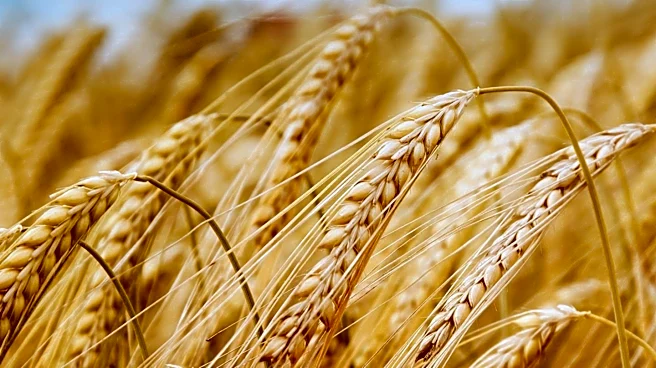
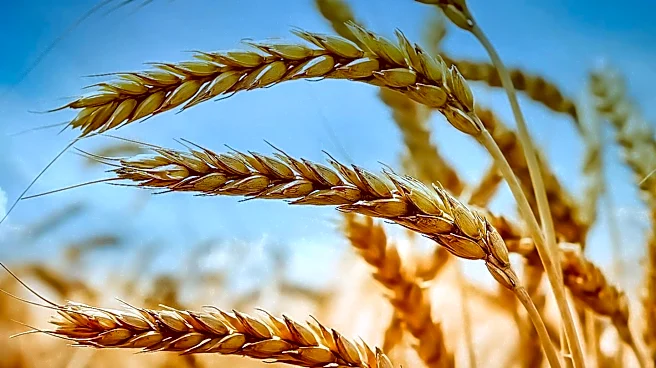
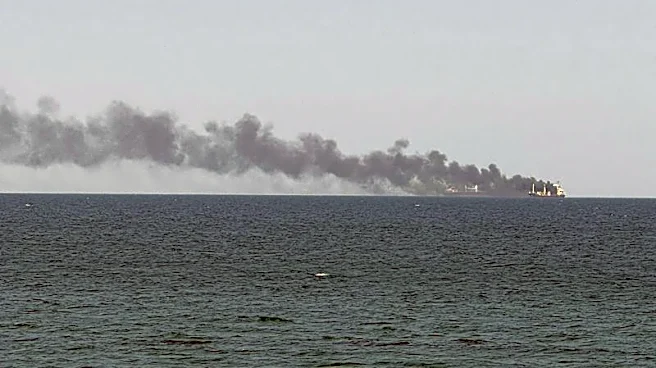
Chicago Board of Trade's wheat prices have surged to a two-year high following renewed attacks on Black Sea grain ports, which have raised concerns about regional exports. The most active wheat contract rose by 26-1/2 cents to $7.04-1/4 a bushel. This
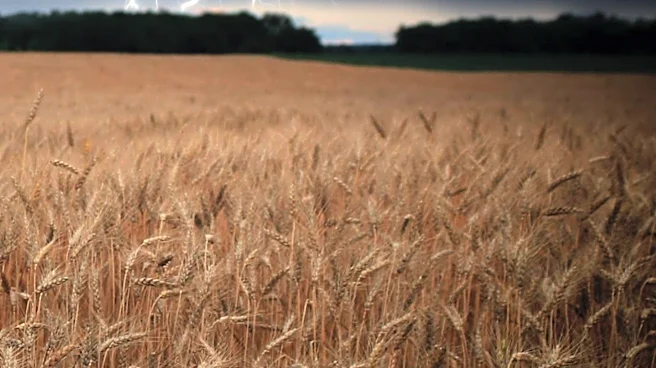
increase is attributed to a 'war and weather premium,' as stated by Mark Soderberg, a senior agricultural market analyst with ADM Investor Services. The Russian Defense Ministry reported attacks on Ukrainian ports and military equipment in Odesa, affecting port infrastructure and resulting in the death of 10 people. Additionally, the expectation of lower production due to adverse weather conditions in the U.S. is contributing to the price rise. Crop scouts in North Dakota have projected a lower average yield for hard red spring wheat, further supporting the price increase.
Why It's Important?
The surge in wheat prices has significant implications for global food markets, particularly as the Black Sea region is a major exporter of grain. The disruption in exports could lead to increased food prices worldwide, affecting both consumers and industries reliant on grain. In the U.S., the rise in wheat prices could benefit domestic producers but also lead to higher costs for food manufacturers and consumers. The situation is exacerbated by rising crude oil prices, which are increasing the demand for agricultural feedstocks used in biofuels, further impacting the prices of soybeans and corn. The ongoing conflict in the Black Sea and adverse weather conditions in the U.S. could lead to sustained volatility in agricultural markets.
What's Next?
The continuation of hostilities in the Black Sea region and the expected return of heat to the U.S. corn belt and Plains could further impact grain production and prices. Stakeholders in the agricultural sector will need to monitor these developments closely. Additionally, the geopolitical tensions in the Middle East, which are affecting oil supplies, could continue to influence agricultural markets. The potential for further disruptions in grain exports and production could lead to increased volatility in global food prices, prompting responses from governments and international organizations to stabilize markets.