






What's Happening?
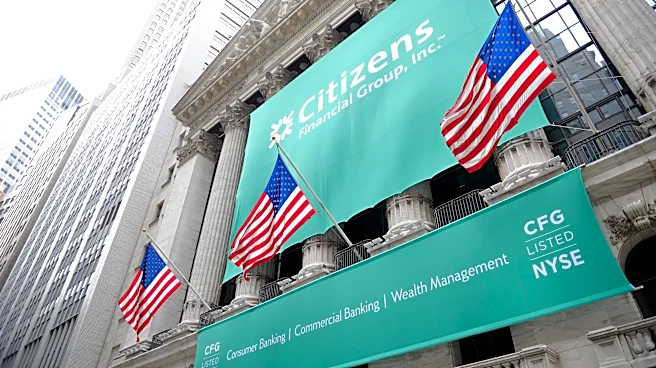
Citizens Financial Group, Inc., a bank holding company based in Providence, Rhode Island, anticipates a $450 million annualized benefit by the end of 2028 from its ongoing technology overhaul. This includes an estimated $300 million to $325 million in expense
savings. The company, which provides retail and commercial banking services through Citizens Bank, launched its private bank in November 2023. This new venture has rapidly accumulated nearly $20 billion in deposits and now contributes 11% to Citizens' bottom line, boasting a 25% return on equity. Citizens plans to significantly expand its private banking presence, increasing its current 10 offices to 17 by the end of next year, with a long-term goal of 30 to 35 locations. CEO Bruce Van Saun noted that commercial and industrial lending remains a 'missing piece of the puzzle' for growth, while student lending is considered a useful customer product but not a primary growth driver. The bank's 'Reimagine the Bank' program encompasses 50 initiatives, with approximately 30 focused on leveraging new technologies to streamline processes.
Why It's Important?
This strategic move by Citizens Financial Group highlights a significant trend within the U.S. banking sector: the increasing reliance on technology and specialized services like private banking to drive profitability and efficiency. The projected $450 million in annualized benefits underscores the substantial financial impact that technological advancements can have on large financial institutions, potentially setting a precedent for competitors. The rapid growth and high return on equity of Citizens' private bank demonstrate the lucrative nature of catering to high-net-worth individuals, indicating a potential shift in focus for other banks seeking to enhance their bottom lines. This expansion could intensify competition in the private banking sector, benefiting affluent clients with more tailored services and potentially leading to consolidation or strategic partnerships among financial firms. Furthermore, the emphasis on technology and expense savings could influence employment trends within the banking industry, with a greater demand for tech-savvy professionals and a potential reduction in roles susceptible to automation.
What's Next?
Citizens Financial Group is set to continue its expansion of private banking offices, aiming for 17 locations by the end of next year and eventually 30-35. This expansion will likely involve recruiting additional staff, particularly in key markets like Florida. The bank will also proceed with its 'Reimagine the Bank' program, implementing new technologies across its operations to realize the projected $450 million in annualized benefits by 2028. CEO Bruce Van Saun has indicated that the bank's 16%-18% return-on-tangible-common-equity target does not depend on these technology benefits, suggesting a robust underlying strategy. While commercial and industrial lending is currently a focus for improvement, its growth is anticipated to pick up if economic volatility subsides, with a forecast of 2.5% U.S. GDP growth over the next two years. The bank will also continue to build its capital markets capabilities, focusing on expanding its coverage bankers and customer base rather than filling product gaps.
Beyond the Headlines
The aggressive technological overhaul and expansion into private banking by Citizens Financial Group reflect broader shifts in the financial services landscape. The focus on technology, particularly automation, raises questions about the future of traditional banking jobs and the evolving skill sets required in the industry. While automation can lead to efficiency and cost savings, it also necessitates a re-evaluation of workforce development and potential retraining programs. The success of the private bank, launched by recruiting former First Republic talent, highlights the strategic importance of human capital and specialized expertise in competitive markets. This move also underscores the increasing segmentation of banking services, with institutions tailoring offerings to specific client demographics. The bank's cautious approach to customer-facing AI agents, citing unresolved responsibility issues, points to the ethical and regulatory challenges that emerging technologies present, particularly in sensitive sectors like finance. This cautious stance could influence the pace and nature of AI adoption across the broader financial industry, emphasizing the need for clear guidelines and accountability frameworks.