




What's Happening?
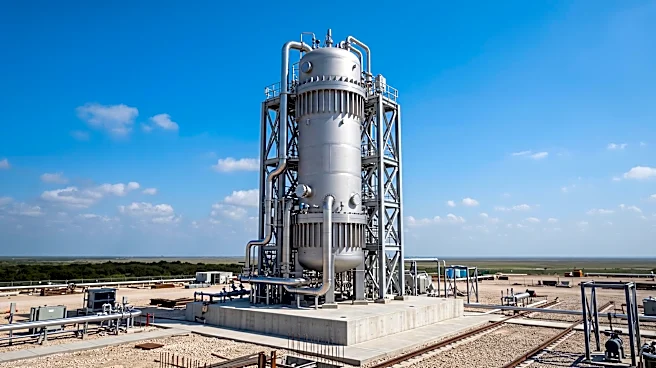
newcleo, a UK-headquartered company, is making progress in advanced nuclear technology, specifically with lead-cooled fast reactors and a closed fuel cycle utilizing MOX fuel from recycled nuclear materials. The company's primary designs include the LFR-AS-200,
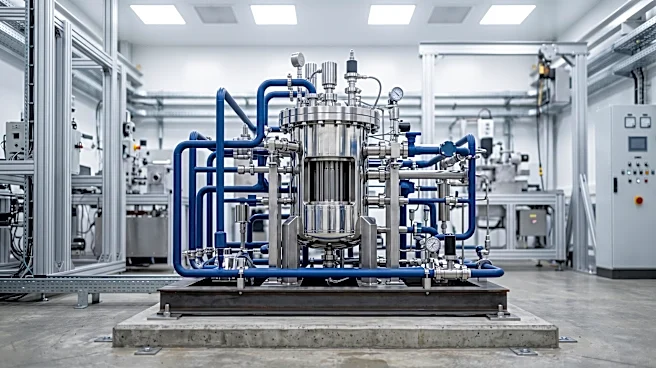
a 200 MWe commercial unit, and the LFR-AS-30, a 30 MWe demonstrator. Liquid lead serves as a coolant, offering passive safety features and near-atmospheric pressure operation, while the fast-neutron spectrum aids in converting long-lived radioactive materials into shorter-lived isotopes. newcleo has initiated pre-application discussions with the U.S. Nuclear Regulatory Commission (NRC) for its LFR-AS-200 design. Additionally, the company is advancing pre-licensing with French authorities through the ASNR, with construction permit filings in France targeted for late 2027. A significant milestone, the PRECURSOR 10 MW lead-cooled non-nuclear test system in Italy, is expected to be completed by the end of 2026 and commissioned in early 2027. The FASTER fuel-testing center in France, which opened in October 2026, is contributing to de-risking MOX production.
Why It's Important?
The development and potential deployment of newcleo's lead-cooled fast reactors and closed fuel cycle technology could significantly impact the U.S. energy landscape and global nuclear industry. This approach offers a distinct position in the Generation IV nuclear space by not solely relying on conventional uranium chains and by acting as both a reactor developer and a potential fuel supplier. The use of MOX fuel from recycled nuclear materials addresses concerns about nuclear waste and resource efficiency. The engagement with the U.S. NRC for pre-application talks signals a potential future expansion of advanced nuclear power options in the United States, aligning with the U.S. goal of quadrupling nuclear capacity by 2050. The passive safety features of lead-cooled reactors could enhance public acceptance and regulatory approval processes. Successful commercialization of this technology could provide a reliable, low-carbon baseload power source, crucial for meeting growing electricity demands from data centers and AI workloads, and contribute to energy independence and waste management strategies.
What's Next?
newcleo's immediate future involves several key milestones. The completion and commissioning of the PRECURSOR 10 MW lead-cooled non-nuclear test system in Italy by early 2027 will be a critical technical validation. Ongoing pre-licensing work with the U.S. NRC and French authorities will continue, with construction permit applications in France targeted for late 2027. The company aims for first criticality of its 30 MWe demonstrator reactor in 2032. Over the longer term, obtaining construction permits, securing funding for first-of-a-kind projects, and scaling MOX production will be crucial for commercial viability. Partnership updates, further financing rounds, and progress on the Oklo fuel-fabrication venture in the U.S. are also anticipated. Regulatory progress, particularly with the U.S. NRC's efforts toward quicker decisions, could shorten timelines and boost investor confidence in advanced nuclear projects.
Beyond the Headlines
The broader implications of newcleo's advancements extend to the ethical and environmental dimensions of nuclear energy. The closed fuel cycle, which utilizes MOX fuel from recycled nuclear materials, addresses the long-standing challenge of nuclear waste management by converting long-lived materials into shorter-lived isotopes. This could significantly reduce the volume and radioactivity of nuclear waste, potentially easing public concerns and regulatory hurdles associated with waste disposal. The emphasis on passive safety features in lead-cooled reactors represents a shift towards inherently safer nuclear designs, which could reshape public perception of nuclear power. Furthermore, the integration of reactor development and fuel supply creates a structural edge, potentially leading to greater control over the nuclear fuel cycle and enhanced energy security. This development could also trigger long-term shifts in global energy policy, promoting advanced nuclear technologies as a viable solution for climate change mitigation and sustainable energy production.