



What's Happening?
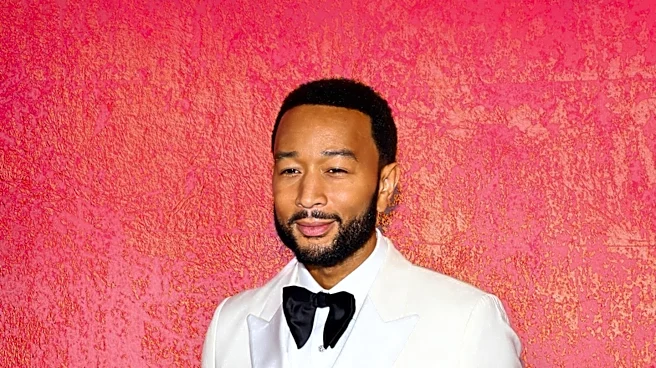
John Legend has expressed his willingness to have a private, man-to-man conversation with Kanye West, but he is not interested in making art with him in the near future. Legend stated that while he doesn't hold personal grudges against West, he believes
West's actions and comments, particularly those harmful to the Black and Jewish communities, require more than the apology West issued in The Wall Street Journal. Legend emphasized that the harm caused by West's statements to entire communities is significant and requires more substantial amends. He noted that West has not reached out to him, nor has he reached out to West, but he remains open to a private discussion.
Why It's Important?
This development highlights the ongoing fallout from Kanye West's controversial statements and actions, particularly their impact on his professional relationships within the music industry. John Legend's stance, a prominent and respected artist, reflects a broader sentiment among some public figures who are willing to engage personally but draw a clear line at professional collaboration due to ethical concerns. This distinction underscores the increasing pressure on artists and public figures to be accountable for their words and actions, and how these can affect their careers and collaborations. It also illustrates the challenges of reconciliation and forgiveness in the public eye, especially when actions have caused widespread harm to specific communities. The decision by Legend, a former collaborator, to distance himself artistically from West sends a strong message about the perceived severity of West's past behavior.
What's Next?
It remains to be seen whether Kanye West will reach out to John Legend for the private conversation Legend has indicated he is open to. The possibility of future artistic collaboration appears unlikely in the short term, given Legend's clear position. West's continued public actions and any further attempts at reconciliation or apologies will likely be scrutinized by his former colleagues and the public. This situation could also influence other artists and industry professionals in their decisions regarding potential collaborations with West. The broader conversation about accountability for public figures and the impact of their statements on various communities will likely continue, with this interaction serving as a notable example of the complexities involved.
Beyond the Headlines
John Legend's nuanced position—open to conversation but closed to artistic collaboration—reveals a deeper ethical framework at play in the entertainment industry. It suggests a growing recognition that personal relationships can be distinct from professional endorsements, especially when an individual's public actions have caused significant societal harm. This approach challenges the traditional notion that artistic talent can exist in a vacuum, separate from the artist's moral conduct. It also highlights the burden placed on individuals within affected communities to determine what constitutes sufficient atonement. The refusal to collaborate artistically can be seen as a form of cultural sanction, signaling that certain behaviors are unacceptable and carry professional consequences, even for highly successful artists. This dynamic contributes to an ongoing re-evaluation of celebrity influence and responsibility in contemporary society.