




What's Happening?
Los Angeles' Chinatown district has been ranked as the coolest neighborhood in the United States and the fourth coolest worldwide, according to a new list compiled by TimeOut. The recognition highlights the district's successful blend of historical preservation
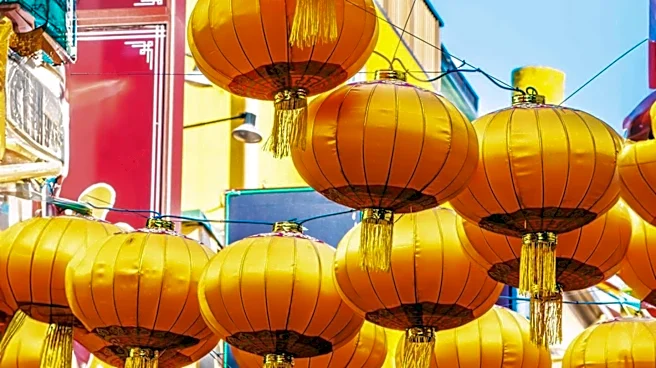
and continuous reinvention, particularly through its burgeoning food and nightlife scene. Over the past year, several new establishments have opened, including Firstborn, Café Tondo, and Archives of Us, which is noted for having the city's best matcha. Additionally, a new music venue, Pacific Electric, launched in March, and cocktail bar Mood Ring is set to open a second location in the area. TimeOut praised Chinatown's distinctive pagoda-style roofs, hanging lanterns, and pedestrian plazas, which contribute to its unique atmosphere. The district also maintains popular long-standing businesses like Phoenix Bakery and Philippe the Original, and features the 32-acre LA State Historic Park, which hosts various public events. The area's history dates back to the late 20th century with the settlement of Chinese and other Asian immigrants, and the 'new' Chinatown emerged in 1938 after the original was demolished for Union Station.
Why It's Important?
This recognition is significant for Los Angeles' Chinatown as it underscores the district's cultural and economic vitality. Being named the coolest neighborhood in the U.S. and a top global destination can boost tourism, attract new businesses, and stimulate local economic growth. For residents, it validates the community's efforts to honor its heritage while embracing modern developments. The influx of new restaurants, bars, and entertainment venues contributes to job creation and diversifies the local economy. This accolade also positions Los Angeles as a city with vibrant, culturally rich neighborhoods that offer unique experiences, potentially drawing more visitors and investment to the broader region. The blend of historical elements with contemporary attractions serves as a model for urban development that respects tradition while fostering innovation. Furthermore, the mention of specific events like the Lunar New Year Dragon Parade and Firecracker Run, and the Mid-Autumn Festival, highlights the cultural richness that makes the neighborhood a compelling destination.
What's Next?
Following this recognition, Los Angeles' Chinatown can anticipate an increase in tourism and local foot traffic, especially during highlighted events like the Lunar New Year in February and the Mid-Autumn Festival in late September. Local businesses, particularly those in the food, nightlife, and retail sectors, are likely to experience a surge in patronage. The district may also see further investment and development as its profile rises, potentially attracting more entrepreneurs and cultural institutions. City officials and local community organizations might leverage this ranking to promote Chinatown as a premier cultural and entertainment destination, possibly leading to enhanced public services or infrastructure improvements to accommodate increased visitors. The continued opening of new venues, such as the second Mood Ring location, indicates ongoing growth and evolution within the neighborhood, suggesting a sustained period of dynamism and cultural enrichment.
Beyond the Headlines
The recognition of Los Angeles' Chinatown as a top neighborhood extends beyond mere tourism and economic benefits; it highlights a broader trend of urban areas successfully integrating historical identity with modern appeal. This balance is crucial for preserving cultural heritage while ensuring contemporary relevance. The district's ability to 'consistently reinvent itself' while maintaining its 'pagoda-style roofs, hanging lanterns, and pedestrian plazas' demonstrates a successful model for urban revitalization that avoids gentrification at the expense of cultural authenticity. This approach can serve as a blueprint for other historic neighborhoods across the U.S. seeking to attract new generations while honoring their roots. The emphasis on diverse culinary offerings, vibrant nightlife, and public spaces like the LA State Historic Park also reflects a growing demand for walkable, experience-rich urban environments that cater to a wide range of interests, fostering a sense of community and cultural exchange.