








What's Happening?
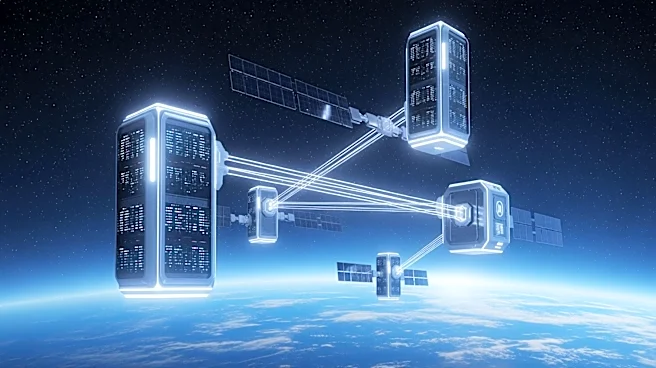
SpaceX, along with other tech giants like Google and Blue Origin, is exploring the potential of building AI data centers in space. This initiative is driven by the increasing constraints on terrestrial data centers and the potential cost-effectiveness
of space-based solutions. SpaceX plans to use its Falcon rockets and Starlink satellites to support these data centers, while Google is collaborating with Planet Labs on a similar project. The concept involves deploying solar-powered satellites equipped with AI chips to harness solar energy continuously. The high initial costs of launching these systems are expected to decrease, making space-based data centers a viable alternative to their Earth-based counterparts.
Why It's Important?
The development of space-based AI data centers could revolutionize the tech industry by providing a sustainable and scalable solution to the growing demand for data processing power. This shift could alleviate the environmental and resource constraints associated with traditional data centers. Additionally, it represents a significant technological advancement, potentially positioning companies like SpaceX and Google as leaders in a new frontier of computing. The success of these projects could also drive further investment and innovation in space technology and infrastructure.
What's Next?
As these projects progress, stakeholders will be monitoring the technological and economic feasibility of space-based data centers. Companies involved will need to address challenges related to satellite deployment, energy efficiency, and cost management. The industry will also be watching for regulatory developments and potential partnerships that could facilitate the growth of this emerging sector. The timeline for these projects will be critical, as companies aim to demonstrate the viability and benefits of space-based data centers in the coming years.