

What's Happening?
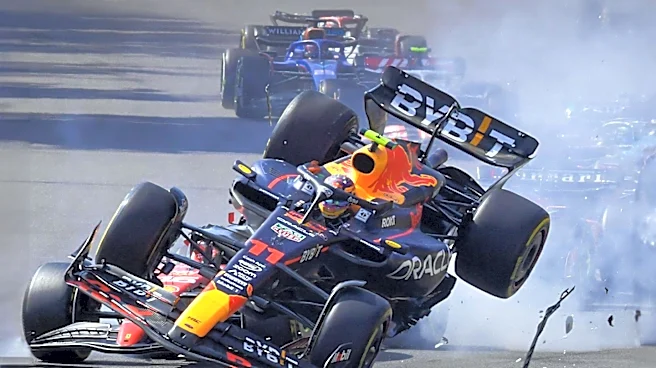
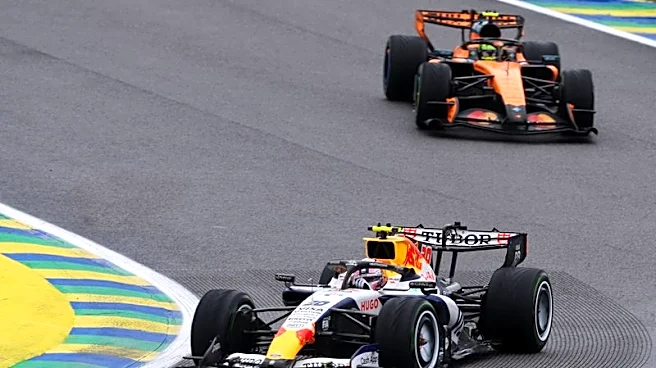
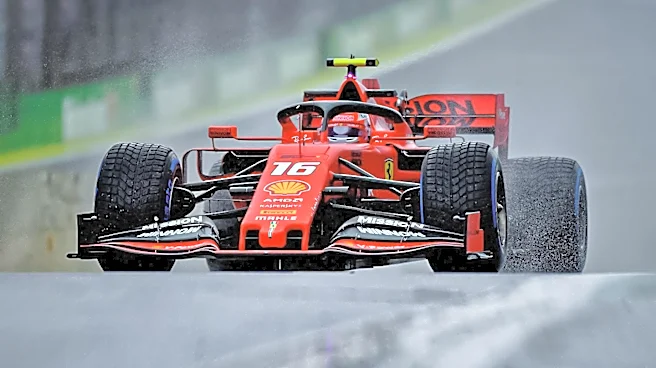
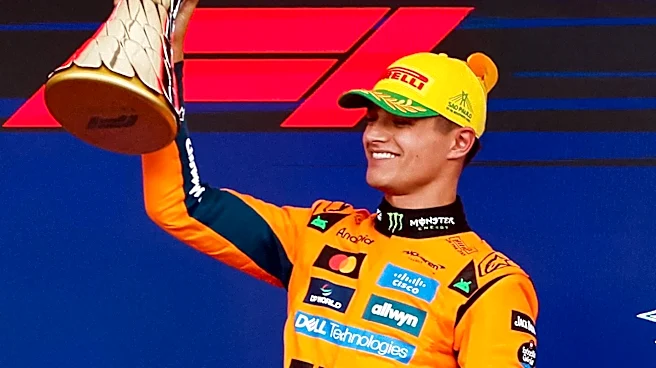
McLaren driver Lando Norris has publicly expressed his disagreement with the five-second time penalty imposed on Ferrari's Charles Leclerc during the Sao Paulo Grand Prix. Leclerc received the penalty for a late-race collision with Liam Lawson of Racing
Bulls while battling for position. The stewards deemed that the contact allowed Leclerc to gain an unfair advantage and overtake Lawson, ultimately dropping Leclerc from seventh to eighth place in the final standings. Norris, who won the race, discussed the incident during a Twitch stream, questioning the stewards' decision. He characterized the contact as 'just racing' and a 'perfectly placed nudge,' suggesting it was a legitimate part of competitive driving rather than an offense warranting a penalty. The stewards, however, concluded that despite the minor nature of the contact, it disrupted Lawson and enabled Leclerc's overtake, constituting a sporting consequence.
Why It's Important?
Norris's public disagreement with the FIA stewards' decision highlights ongoing debates within Formula 1 regarding racing incidents and the consistency of penalty applications. As a leading driver and race winner, his opinion carries weight and can influence fan perception and discussions among fellow competitors. Such statements bring scrutiny to the officiating body, prompting questions about the interpretation of racing rules and the balance between aggressive driving and fair play. This particular incident underscores the subjective nature of judging on-track contact, where drivers often have a different perspective than race officials. The outcome of these decisions can significantly impact championship standings and team strategies, making consistency and clarity in stewarding crucial for the integrity of the sport.
What's Next?
While Norris's comments are unlikely to overturn the specific penalty issued to Charles Leclerc, they contribute to a broader conversation within Formula 1 about stewarding standards. Such discussions often lead to reviews and clarifications of racing guidelines by the FIA, though these processes are typically long-term. Drivers, teams, and the FIA will continue to engage in dialogue regarding what constitutes acceptable contact versus a penalty-worthy offense. Future race incidents will likely be scrutinized more closely in light of these ongoing debates, with drivers potentially adjusting their on-track behavior based on perceived leniency or strictness from the stewards. The incident may also fuel further calls for greater transparency or consistency in how penalties are applied across different races and situations.
Beyond the Headlines
This incident touches upon the philosophical divide in motorsport between 'hard racing' and 'fair play.' Many drivers and fans advocate for allowing more aggressive on-track battles, believing it enhances the spectacle of racing, while others prioritize strict adherence to rules to prevent dangerous driving or unfair advantages. Norris's view aligns with the former, suggesting that minor contact is an inherent part of competitive racing. The stewards' decision, however, reflects a stricter interpretation, emphasizing that any contact leading to an advantage, no matter how slight, can be penalized. This tension is a constant in Formula 1 and influences the character of the sport. It also raises questions about the role of technology and data in stewarding, as officials increasingly rely on multiple camera angles and telemetry to make split-second decisions, which can still be subject to differing interpretations.