






What's Happening?
ESPN is currently under scrutiny for its substantial payments to prominent on-air personalities like Pat McAfee and Stephen A. Smith, while simultaneously implementing mass layoffs across its workforce. The network's 'Monday Night Countdown' has achieved
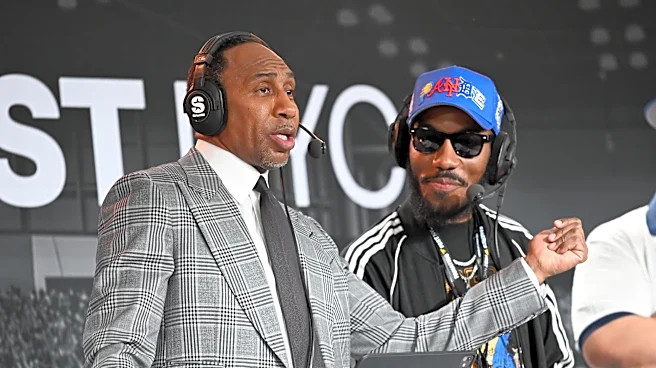
its best viewership since 2015, averaging 1.6 million viewers through Week 9, featuring a star-studded lineup including Scott Van Pelt, Jason McCourty, Stephen A. Smith, Pat McAfee, Troy Aikman, and Marcus Spears. However, this success is overshadowed by public discontent regarding the financial disparity. Pat McAfee reportedly earns $30 million annually from ESPN, with potential negotiations for a new deal ranging from $60 million to $65 million per year. Stephen A. Smith secured a five-year contract worth at least $100 million in March 2025. These figures have drawn criticism from fans and media observers, especially in light of recent layoffs that affected long-tenured employees such as Ryan Clark and Karl Ravech, as well as David Lloyd and Stephania Bell.
Why It's Important?
This situation highlights a growing tension within the sports media industry regarding talent compensation and corporate cost-cutting measures. The strategy of investing heavily in a few 'mega-stars' who possess significant digital audiences and viral appeal, while reducing the broader workforce, reflects a shift in how media companies aim to attract and retain viewers in a changing landscape. For ESPN, a subsidiary of Disney, these decisions are part of a larger effort to manage costs amidst declining cable TV subscriptions and the rise of streaming. The public backlash suggests a potential disconnect between corporate financial strategies and audience perception of fairness and employee value. This approach could impact employee morale, public trust in the brand, and potentially influence future talent negotiations and layoff decisions across the industry.
What's Next?
The debate over ESPN's compensation practices and layoffs is likely to continue, potentially influencing future contract negotiations and public relations strategies for the network. As cable television continues to shrink and streaming platforms gain dominance, ESPN and other media companies may further refine their talent acquisition and retention models, prioritizing personalities who can drive engagement across multiple platforms. The ongoing public discussion could also pressure ESPN to address the perceived disparity between executive and top talent salaries versus the compensation and job security of other employees. Stakeholders, including media critics, former employees, and sports fans, will likely continue to monitor ESPN's financial decisions and their impact on both content quality and corporate responsibility.
Beyond the Headlines
The situation at ESPN reflects a broader trend in media and entertainment, where the value of individual 'star power' is increasingly prioritized over traditional journalistic or production roles. This shift raises ethical questions about corporate responsibility, employee loyalty, and the sustainability of a business model that concentrates wealth at the top while shedding jobs elsewhere. It also underscores the evolving nature of media consumption, where personalities with strong social media presences can command higher value due to their direct connection with audiences. The long-term implications could include a more homogenized media landscape, where content is driven by a few highly paid individuals, potentially at the expense of diverse voices and in-depth reporting. This model also poses risks if the popularity of these 'mega-stars' wanes, leaving companies vulnerable after significant financial investments.