


What's Happening?
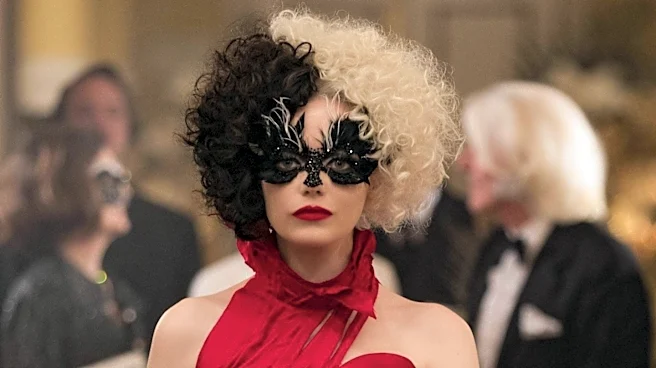
Vogue has published an article delving into the appeal of 'fashion villains' in movies, particularly during the fall season. The piece argues that characters often portrayed as antagonists, such as Miranda Priestly and Emily Charlton from 'The Devil Wears
Prada' or Wilhelmina Slater from 'Ugly Betty,' are frequently misunderstood. Instead of being purely evil, these characters are depicted as chic, driven, and highly competent professionals who are simply good at their jobs and impeccably dressed. The article suggests that audiences often side with these 'villains' because they embody ambition, style, and a no-nonsense attitude, challenging the traditional narrative of rooting for the protagonist.
Why It's Important?
This article is significant for the fashion and entertainment industries as it re-evaluates character archetypes and their impact on audience perception. By highlighting the 'fashion villain,' Vogue challenges conventional storytelling that often demonizes strong, ambitious women. This perspective can influence how future characters are written and perceived, potentially leading to more nuanced and complex portrayals of female leadership and ambition in film and television. For the fashion industry, it reinforces the idea that style is not just about aesthetics but also about power, confidence, and identity. It encourages a deeper appreciation for characters who use fashion as a tool for self-expression and professional assertion, rather than just vanity.
What's Next?
This re-evaluation of 'fashion villains' could spark further discussions within film criticism and popular culture about gender roles, ambition, and the portrayal of power. It might encourage screenwriters and directors to create more multi-dimensional characters who defy simple categorization as 'good' or 'evil.' For fashion brands, this trend could inspire campaigns that celebrate strong, assertive female figures, moving beyond traditional ideals of femininity. Audiences might also become more critical of simplistic narratives, seeking out films and shows that offer complex characters with whom they can identify, even if those characters are not traditionally heroic. This shift could lead to a richer and more diverse landscape of cinematic storytelling.
Beyond the Headlines
The article touches upon deeper societal implications regarding how ambition, particularly in women, is often perceived and judged. By reframing 'fashion villains' as admirable figures, Vogue subtly critiques the tendency to label powerful women as 'difficult' or 'mean.' This perspective encourages a re-examination of societal biases against female assertiveness and leadership. It also highlights the cultural power of fashion as a form of armor and expression, allowing characters to project authority and confidence. The piece suggests that true villainy might lie not in ambition or high standards, but in betrayal or lack of integrity, as exemplified by the protagonist Andy's actions in 'The Devil Wears Prada.' This nuanced view contributes to a broader cultural conversation about empowerment, perception, and the complexities of human behavior in professional settings.