







What's Happening?
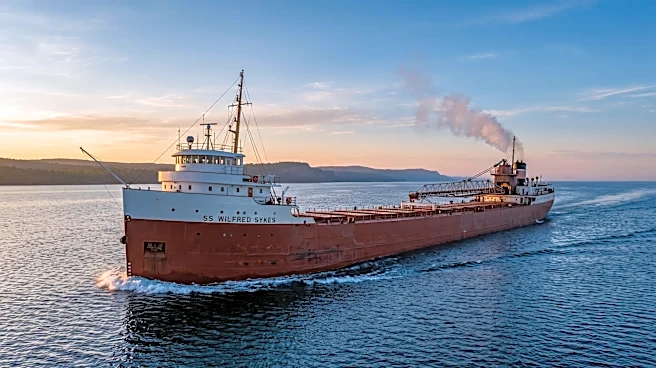
The SS Wilfred Sykes, a steam-powered freighter built in 1949, remains an active vessel on the Great Lakes, primarily transporting limestone for the steel industry. It is operated by Central Marine Logistics and is notable as one of the last active steam-powered freighters
in the region. The Sykes was a pioneering vessel, being the first American-built Great Lakes freighter constructed after World War II and the first to burn Bunker C heavy fuel oil instead of coal. It was also the first Great Lakes vessel designed with a 70-foot beam and capable of carrying over 20,000 tons of cargo, now up to 24,000 tons depending on draft. The ship's current operations involve loading limestone from Port Dolomite and Port Inland in northern Michigan, delivering it to Cleveland-Cliffs steelmaking complexes in Burns Harbor, Indiana, and East Chicago, Indiana. The limestone serves as a flux in steelmaking, helping to remove impurities during the ironmaking process.
Why It's Important?
The continued operation of the SS Wilfred Sykes highlights the enduring legacy of steam-powered vessels in U.S. industrial logistics, particularly on the Great Lakes. As one of the few remaining active steam freighters, it represents a historical link to a bygone era of maritime technology while still fulfilling a critical role in the modern steel supply chain. The vessel's specialized function in transporting limestone underscores the foundational importance of raw material logistics to heavy industries like steelmaking. Its efficiency in moving large quantities of bulk cargo across the Great Lakes directly supports the production capabilities of major steel manufacturers in the Midwest. The Sykes's longevity also speaks to the robust engineering and maintenance practices that have kept such a historic vessel operational for decades, contributing to the economic stability of the region's industrial sector.
What's Next?
The SS Wilfred Sykes is expected to continue its role in transporting limestone, a vital component for steel production, across the Great Lakes. Its ongoing service will depend on continued demand from steelmaking facilities and the operational viability of its steam-powered systems. As one of the last of its kind, its future may also involve increased recognition for its historical significance, potentially leading to preservation efforts or educational initiatives. The vessel's continued maintenance and operation by Central Marine Logistics will ensure its contribution to the Great Lakes shipping industry for the foreseeable future, adapting to the evolving needs of the steel sector while navigating the challenges of an aging fleet and changing environmental regulations.
Beyond the Headlines
The SS Wilfred Sykes's continued operation offers a unique perspective on the evolution of industrial shipping and the balance between historical preservation and modern economic demands. Its status as a steam-powered vessel in an era dominated by more modern propulsion systems raises questions about the sustainability and efficiency of older technologies, as well as the cultural value placed on industrial heritage. The ship's role in the steel industry also subtly connects it to broader discussions about domestic manufacturing, infrastructure, and the environmental impact of heavy industry. The dedication required to maintain such a vessel, from its specialized fuel requirements to the skilled crew, reflects a commitment to a particular way of life and work that is increasingly rare in contemporary shipping. This vessel serves as a tangible reminder of the industrial past and its ongoing, albeit niche, presence in the present.