







What's Happening?
Gopi, Vice President of Sustainability at Nestlé Purina, shared insights into his career journey and the company's sustainability initiatives. Inspired by an environmental activist family friend and a college professor, Gopi has focused his career on environmental responsibility.
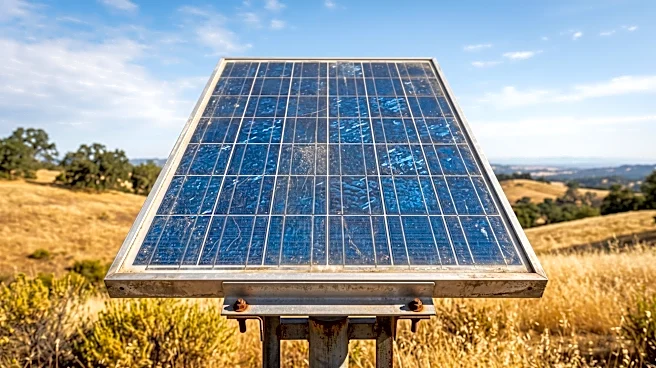
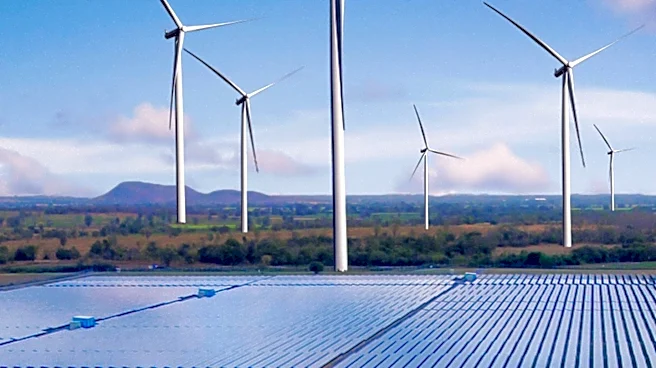
He highlighted Purina's commitment to achieving 100% renewable electricity by 2025, which includes investments in a large-scale wind farm and solar power projects. The company measures its sustainability progress through key performance indicators (KPIs) such as greenhouse gas emissions, water consumption, and packaging initiatives. Gopi emphasized that the ultimate goal is to integrate sustainability into the daily lives of employees and consumers, moving beyond it being just a 'buzzword.'
Why It's Important?
This initiative by Nestlé Purina reflects a growing trend among major U.S. corporations to prioritize environmental sustainability, driven by consumer demand, regulatory pressures, and a recognition of long-term business resilience. The focus on renewable electricity and measurable KPIs like greenhouse gas emissions and water consumption demonstrates a tangible commitment to reducing environmental impact. For the U.S. market, this signals a shift towards more sustainable manufacturing and supply chain practices within the pet food industry, potentially influencing other sectors. It also highlights the increasing importance of sustainability roles within corporate structures, indicating a demand for professionals with expertise in environmental engineering and related fields. The challenge of educating and engaging consumers, as mentioned by Gopi, is crucial for the broader adoption of sustainable practices across society.
What's Next?
Nestlé Purina is on track to achieve its goal of 100% renewable electricity by 2025, suggesting continued investment in wind and solar energy projects. The company will likely continue to refine its sustainability KPIs and expand its initiatives to other areas, such as packaging and water conservation. Efforts to educate and engage employees and consumers about sustainability will remain a priority, potentially through campaigns like 'Dare to Care' and 'Pet Power Week,' and through online and in-person training. The company's approach to influencing plans for new factories to incorporate efficient technology and protect natural resources indicates a proactive stance on environmental stewardship. Future developments may include further partnerships with local governments and community leaders to amplify their impact.
Beyond the Headlines
The emphasis on integrating sustainability into the 'way of life' for employees and consumers points to a deeper cultural shift within corporations. It suggests that sustainability is no longer just a compliance issue but a core value that can drive innovation and brand loyalty. The challenges of inconsistent governing standards and consumer education highlight the evolving nature of sustainability as a field, requiring continuous adaptation and communication strategies. By influencing the design of new factories to be more efficient and environmentally friendly, Nestlé Purina is setting a precedent for responsible industrial development. This proactive approach can lead to long-term benefits, including reduced operational costs, enhanced brand reputation, and a positive impact on local communities and ecosystems.