




What's Happening?
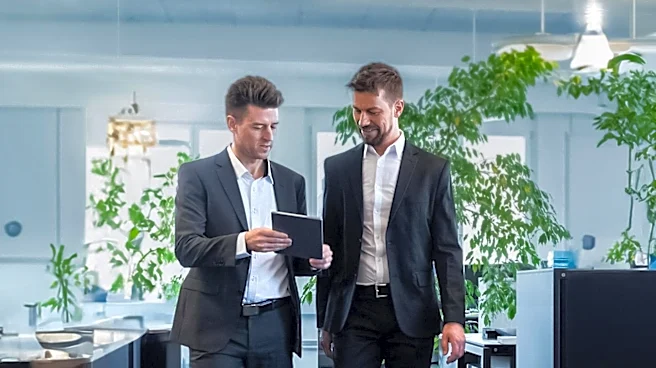
A significant shift is occurring in workplace design, moving away from traditional, sterile office environments towards 'living, breathing workspaces.' This movement emphasizes a human-centered approach, recognizing the profound impact of physical surroundings
on an individual's ability to think, create, and connect. The emerging design philosophy integrates elements of nature, known as biophilia, to foster creativity and well-being. This involves more than just adding plants; it's a holistic system that mimics natural ecosystems through direct experiences like living plants, natural light, and water features, and indirect experiences such as natural materials, patterns, and forms. The goal is to create environments that are sensorially rich and psychologically restorative, moving beyond mere aesthetics to support the human spirit and address complex problems through non-linear, systems-level thinking. This evolution in consciousness acknowledges that humans are biological creatures, not machines, and their environment deeply influences their performance and satisfaction.
Why It's Important?
This paradigm shift in workplace design holds significant importance for U.S. industries and society. By prioritizing human well-being and natural integration, companies can combat issues like employee burnout and foster genuine innovation. The traditional 'gray box' office, built on a misunderstanding of human nature, is being replaced by spaces that nurture creativity and connection, which are crucial for solving complex modern problems. Investing in biophilic and human-centric designs can lead to increased employee loyalty, engagement, and a stronger corporate culture. It sends a powerful message to employees that they are valued as whole individuals, not just units of productivity. Furthermore, this approach can attract a new generation of talent that prioritizes purpose and values alignment, making companies more competitive in the evolving job market. The integration of natural elements can also subtly promote a culture of stewardship and sustainability, aligning business practices with broader environmental values.
What's Next?
The transition to more biophilic and human-centric workspaces will likely involve overcoming initial investment barriers, particularly for smaller businesses. Companies will need to genuinely commit to this philosophy to avoid 'greenwashing,' where superficial natural elements are added without deeper integration, which can be perceived as inauthentic by employees. Future developments will focus on ensuring equitable and accessible design, distributing natural light and restorative spaces widely, and catering to a neurodiverse workforce by offering a variety of settings. The integration of technology with nature will also be key, using smart building systems to optimize indoor environments and digital displays to simulate natural experiences. This will lead to the creation of 'symbiotic buildings' where technology and nature collaborate to enhance well-being and performance. The ongoing evolution of workspace design will continue to redefine the role of the office, emphasizing creativity, well-being, and a renewed connection to the natural world.
Beyond the Headlines
Beyond the immediate benefits of improved employee well-being and productivity, the movement towards living, breathing workspaces signifies a deeper cultural and philosophical shift in how society views work. It challenges the long-held industrial mindset that treated employees as uniform components, highlighting the limitations of a purely mechanical approach to work. This evolution recognizes that the human psyche is an ecosystem, deeply intertwined with natural patterns, and that sensory-rich environments are essential for psychological restoration and cognitive function. The adoption of nature-centric design reflects a move towards a more holistic, relational view of employment, where a company's investment in its physical environment becomes a daily, tangible manifestation of its values. This can foster a sense of shared responsibility and respect for the environment, potentially influencing broader societal attitudes towards sustainability and human-centered design in other areas of life.