









What's Happening?
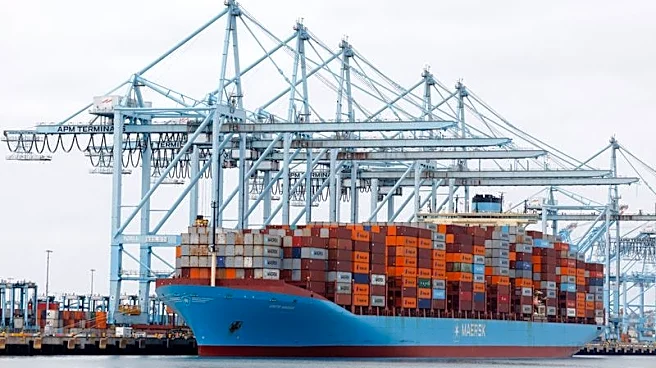
U.S. import levels are reaching unprecedented heights as retailers and manufacturers expedite shipments to avoid anticipated tariffs and cost increases. According to data from Descartes Systems Group, import volumes at U.S. ports exceeded 2.4 million
TEU in June, marking an over eight percent increase from the previous year. This surge is attributed to the looming expiration of President Trump's temporary 10 percent Section 122 tariffs on July 24, and the administration's plans to introduce new tariffs in response to forced labor claims. The National Retail Federation (NRF) highlights that despite economic challenges, consumer spending remains robust, although supply chain disruptions from the conflict in Iran and affordability issues are affecting the market. The NRF also notes that the peak shipping season has shifted earlier, with retailers preparing for potential tariff hikes in August.
Why It's Important?
The increase in U.S. imports underscores the ongoing volatility in international trade policies and their impact on domestic markets. Retailers are strategically frontloading shipments to mitigate the effects of potential tariff increases, which could lead to higher consumer prices. This proactive approach reflects broader concerns about supply chain stability and economic uncertainty, particularly in light of geopolitical tensions and fluctuating fuel prices. The situation highlights the interconnectedness of global trade and the significant influence of U.S. tariff policies on international commerce. As businesses navigate these challenges, the potential for increased costs and market disruptions remains a critical concern for economic stakeholders.
What's Next?
As the expiration of the current tariffs approaches, businesses and policymakers will be closely monitoring the administration's next steps regarding new tariff implementations. The NRF projects a continued rise in import volumes through July, with a potential decline in the latter months of the year. Retailers are likely to continue adjusting their strategies to manage inventory and pricing in anticipation of further trade policy developments. The outcome of these tariff decisions will have significant implications for consumer prices, supply chain operations, and the broader economic landscape.