







What's Happening?
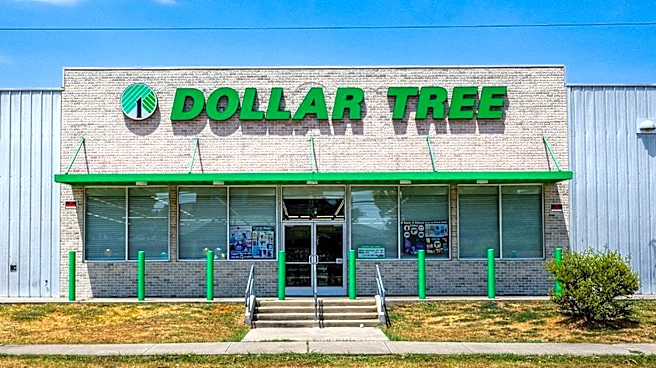
Dollar Tree, led by CEO Mike Creedon, announced robust financial results for the third quarter of fiscal year 2026. The company reported a total sales increase of 6.9% and comparable store sales growth of 4.6%, surpassing its own expectations. This growth was
primarily driven by a significant 3.8% increase in customer traffic, a notable acceleration from the 0.4% traffic growth in the second quarter. Average ticket size also saw a modest increase of 0.8%. Consumables were a key driver, with an 8.9% comparable sales increase, reflecting customers' efforts to stretch budgets and the appeal of Dollar Tree's improved assortment. Discretionary sales increased by 0.4%, building on strong performance from the previous year. The company's multi-price strategy continues to expand, now accounting for 18% of total sales, a 300 basis point increase from the prior year. Mixed baskets, combining both opening price point and multi-price items, represented approximately 25% of transactions and nearly half of total sales, indicating strong customer acceptance of the expanded offerings. Dollar Tree also completed 3,000 store refreshes and renovations over the past year to enhance the customer experience.
Why It's Important?
Dollar Tree's strong third-quarter performance highlights the resilience and adaptability of discount retailers in a challenging economic environment where consumers are increasingly value-conscious. The acceleration in customer traffic, particularly from middle and higher-income households, indicates a broader appeal beyond its traditional lower-income customer base. This shift suggests that Dollar Tree's strategy of offering both opening price points and multi-price items, including national brands and larger pack sizes, is effectively meeting diverse consumer needs. The company's ability to drive growth through increased frequency of visits from existing customers, rather than solely relying on new customer acquisition, is a significant competitive advantage. Furthermore, the focus on improving store execution and launching national marketing campaigns aims to solidify its market position and build long-term customer loyalty. The successful navigation of inflationary pressures through cost mitigation levers demonstrates a robust operational framework, which is crucial for maintaining profitability and shareholder value in the current economic climate.
What's Next?
Dollar Tree anticipates continued momentum into the fourth quarter, projecting net sales between $5.7 billion and $5.8 billion, with comparable store sales growth of 3% to 4%. Adjusted diluted earnings per share are expected to be in the range of $2.46 to $2.66. The company plans to continue evaluating its initiatives, particularly those supported by tariff refunds, to determine which warrant ongoing investment based on customer response and financial returns. Management will provide a more detailed outlook for fiscal year 2027 during its year-end earnings call, addressing potential impacts from persistent elevated fuel and freight costs, product cost inflation, and the winding down of transition services agreement income. Dollar Tree will continue to leverage its five cost mitigation strategies—negotiating with suppliers, reengineering products, diversifying sourcing, discontinuing underperforming items, and optimizing pricing—to manage these pressures. The company also plans to implement technology to benefit store labor and seek other cost-saving opportunities.
Beyond the Headlines
The success of Dollar Tree's multi-price strategy and its ability to attract a broader customer base could signal a significant shift in the discount retail sector. By moving beyond its traditional single-price point model, Dollar Tree is not only expanding its product assortment but also redefining consumer expectations for value retailers. This evolution could lead to increased competition within the discount segment, as other retailers may seek to emulate Dollar Tree's approach to attract value-seeking consumers. The company's emphasis on customer engagement and store experience, coupled with its strategic marketing efforts, suggests a long-term vision to transform its brand perception from a purely 'dollar store' to a comprehensive value destination. This strategic pivot could have lasting implications for how discount retailers operate and compete, potentially blurring the lines between traditional dollar stores and broader general merchandise retailers. The ongoing challenge of managing inflationary costs while maintaining competitive pricing will be a critical factor in sustaining this growth trajectory and solidifying its new market identity.