






What's Happening?
Lush has launched a new Día de los Muertos collection, which is being praised for its authenticity and collaborative development. The collection was created through Lush's Co-Create program, an internship designed to empower employees to develop products
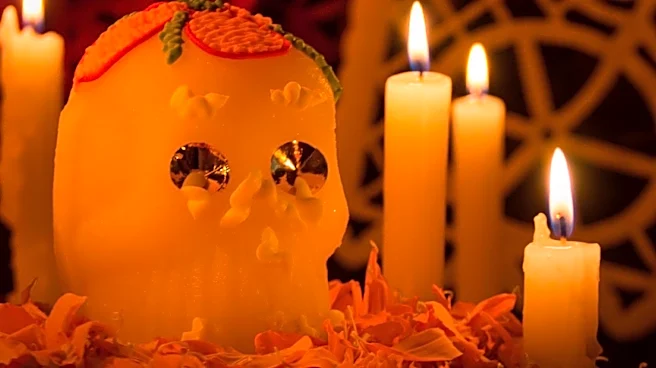
that share authentic stories from their own communities. Día de los Muertos, a Mexican holiday celebrated on November 1 and 2, is a time for families to remember and honor deceased loved ones, characterized by a warm and joyful mood rather than a spooky one. The holiday's roots trace back thousands of years to Indigenous traditions in Mexico, later blending with Catholic feasts. Key elements of the celebration include the ofrenda (home altar) decorated with photos, favorite foods, drinks, candles, marigolds (cempasúchil), sugar skulls, and pan de muerto. The Lush collection features several products, each created by a different employee: the Calaverita Bath Bomb by Shantal Astudillo (Lush Toronto), Postrecito Soap by Jailene Mandujano (Lush San Diego), Horchata Body Scrub by Cena Miller (Lush Texas), and Aliento del Colibrí Shower Gel by Diego Cruz Rodriguez (Lush Australia). A Knot Wrap was designed by Blanca Molina from Guadalajara, Mexico.
Why It's Important?
Lush's Día de los Muertos collection is significant because it exemplifies a model of corporate engagement with cultural holidays that prioritizes authenticity and internal collaboration. By utilizing its Co-Create program, Lush empowers employees from relevant cultural backgrounds to lead product development, ensuring that the collection genuinely reflects the spirit and traditions of Día de los Muertos. This approach stands in contrast to instances of cultural appropriation, setting a positive example for other brands. The collection not only offers unique products but also serves as a vehicle for cultural education, introducing consumers to the meaning and customs of the holiday. This initiative can foster greater cultural understanding and appreciation among a broader audience, while also demonstrating a commitment to diversity and inclusion within the company's product development process. It highlights the value of employee-driven innovation rooted in personal heritage.
What's Next?
Following the launch of the Día de los Muertos collection, Lush will likely monitor its reception and sales, which could influence future product development strategies for culturally significant holidays. The success of this employee-led Co-Create program may encourage Lush to expand similar initiatives, further empowering its diverse workforce to contribute to product lines that reflect their heritage. Other companies might observe Lush's approach and consider adopting similar models for engaging with cultural celebrations, moving towards more authentic and collaborative product development. The collection's positive reception could also lead to its reintroduction in future years, potentially with new additions or variations, solidifying its place as an annual offering that celebrates Día de los Muertos with respect and authenticity.
Beyond the Headlines
Lush's Día de los Muertos collection, developed through its Co-Create program, represents a significant step in corporate responsibility regarding cultural representation. This model moves beyond superficial marketing by genuinely involving individuals from the culture being celebrated, addressing ethical concerns around cultural appropriation. It highlights a shift towards more inclusive business practices where diverse employee voices are not just heard but are central to product creation. Legally, while not directly impacting legislation, such initiatives contribute to a broader corporate environment that values diversity, potentially influencing future guidelines for cultural marketing and intellectual property related to traditional designs. Culturally, this approach helps to educate consumers about the true meaning of holidays like Día de los Muertos, fostering respect and understanding rather than mere commercialization. It also empowers employees by validating their cultural heritage as a valuable asset within the corporate sphere, promoting a more equitable and representative marketplace.