







What's Happening?
The National Center for Employee Ownership (NCEO) has convened a task force of trustees and released a report addressing the complexities of Employee Stock Ownership Plan (ESOP) valuation and the associated repurchase obligation. This obligation requires
ESOP companies to buy back shares from employees who leave or become eligible to diversify their accounts, representing a significant annual expense. The report highlights that shares are typically repurchased based on a valuation assuming a willing financial buyer would acquire all shares and eliminate the repurchase obligation. Consequently, the valuation may not explicitly include the company's liability for this obligation in the share price. The NCEO's report delves into the fundamental problem, governing authority, common approaches, ESOP valuation basics, specific issues, and provides recommendations for companies. While most ESOP companies manage this obligation sustainably, the report suggests that reflecting the expected liability in appraisals could enhance ESOP sustainability. The current standard of value makes it challenging to account for this obligation as a future liability.
Why It's Important?
The NCEO's report is crucial for the U.S. business landscape, particularly for the thousands of companies operating with ESOPs. The current valuation practices, which often do not fully account for the repurchase obligation as a liability, can lead to an inaccurate representation of a company's financial health and potentially overpaying for shares. This could disproportionately affect long-term employees, as those who leave earlier might receive a higher price at the expense of those who remain. If companies are forced to put cash into the ESOP to fund future obligations, it removes capital that could otherwise be used for growth or other strategic investments. Conversely, if the cash is retained but not accounted for as a liability, it can create a false sense of liquidity. The report's recommendations and its call for the Department of Labor to allow valuations to reflect the repurchase obligation in forthcoming regulations could significantly impact how ESOPs are structured, valued, and sustained, ensuring fairer outcomes for employees and greater financial stability for companies.
What's Next?
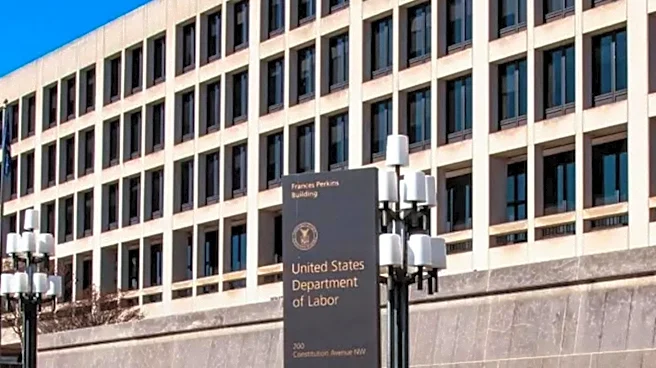
The NCEO's report aims to inform the Department of Labor (DOL) as it develops new valuation regulations. The primary next step would be for the DOL to consider and potentially incorporate the report's recommendations, specifically allowing valuations to reflect the repurchase obligation as a future liability. This regulatory change would necessitate adjustments in how ESOP companies conduct their appraisals and financial planning. Companies might need to revise their financial models to accurately project and account for this liability, potentially leading to changes in share pricing and benefit structures. Appraisers would also need to adapt their methodologies to comply with any new DOL guidelines. Stakeholders, including ESOP trustees, company management, and employees, will closely monitor the DOL's response, as any new regulations could have far-reaching implications for the financial sustainability and attractiveness of ESOPs across the U.S.
Beyond the Headlines
Beyond the immediate financial and regulatory implications, the NCEO's report touches upon deeper ethical and structural issues within ESOPs. The current valuation dilemma highlights a potential conflict between short-term employee payouts and the long-term sustainability of the ESOP structure. If the repurchase obligation is not adequately reflected, it could create an illusion of higher share value, potentially leading to unsustainable practices or even the collapse of some ESOPs in the long run. This issue also raises questions about transparency and fairness in employee ownership models. A more accurate and comprehensive valuation method, as advocated by the NCEO, could foster greater trust among employees and ensure the longevity of ESOPs as a viable and equitable form of ownership. The report underscores the ongoing need for robust regulatory frameworks that balance the interests of current and future employee-owners with the financial health of the company.