



What's Happening?
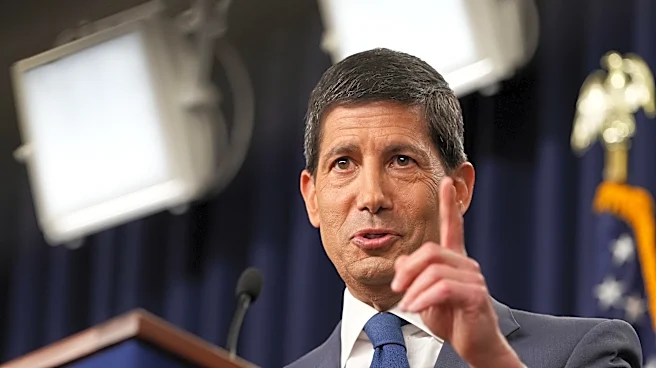
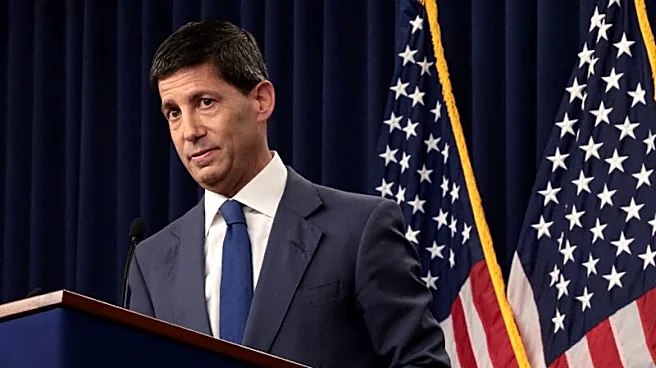
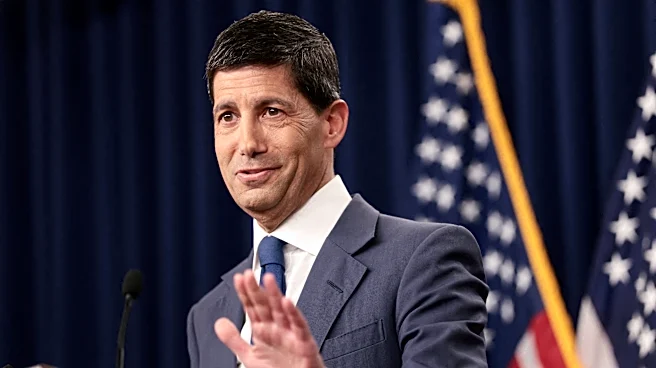
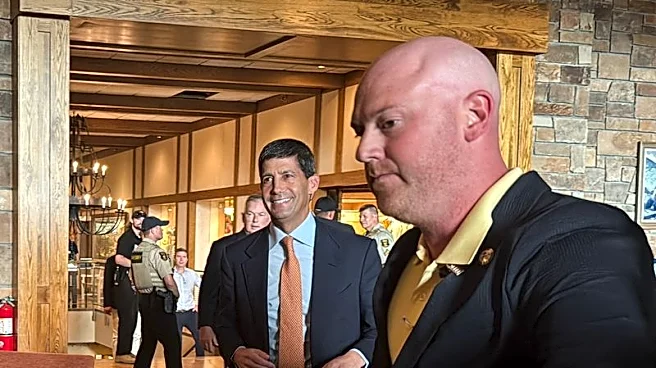
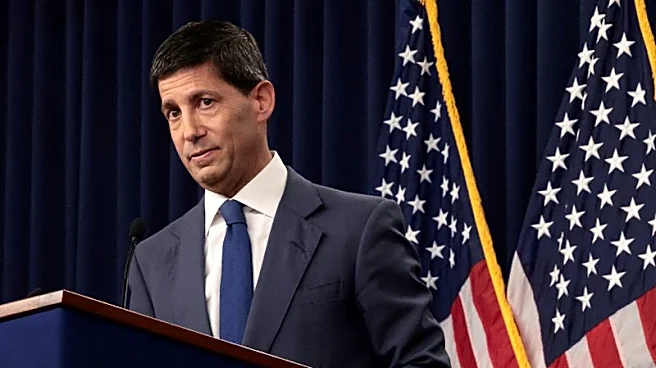
US Federal Reserve Chair Kevin Warsh is confronting a significant decision regarding whether to raise interest rates to combat persistent inflation, a move that could put him at odds with President Trump. During his first appearance as Fed chair at the annual
conference in Jackson, Wyoming, Warsh clarified the central bank's commitment to achieving its 2 percent inflation target. He indicated that the Fed might need to raise interest rates if price pressures do not ease, despite mixed messages sent in July. Financial markets are now anticipating a quarter-point increase at the September 15-16 meeting. Warsh dismissed recent data suggesting easing price pressures, emphasizing that underlying inflation trends have not meaningfully improved. He also noted that with a stable labor market, the Fed's primary focus is on tackling inflation. Alberto G. Musalem, president of the US Federal Reserve Bank of St. Louis, supported Warsh's stance, advocating for rate hikes to curb inflation, especially given persistent demand forces pushing inflation above 2 percent. Musalem stressed that delaying action could negatively impact inflation expectations.
Why It's Important?
This situation highlights a critical tension between the Federal Reserve's mandate for price stability and potential political interference, particularly from President Trump, who has consistently advocated for lower interest rates. A decision to raise rates would underscore the Fed's independence and its commitment to its 2 percent inflation target, which is crucial for maintaining economic stability and investor confidence. However, such a move could also trigger a political confrontation with the administration, especially just before midterm elections. The Fed's actions directly influence borrowing costs for businesses and consumers, impacting economic growth, employment, and investment. If inflation remains elevated, it erodes purchasing power and can lead to economic uncertainty. Conversely, raising rates too aggressively could slow down economic activity, potentially leading to a recession. The market's anticipation of a rate hike reflects the seriousness with which investors view the Fed's commitment to controlling inflation, and any deviation from this expectation could lead to significant market volatility. The outcome will set a precedent for the Fed's autonomy in monetary policy decisions under political pressure.
What's Next?
The immediate focus is on the upcoming US consumer price index report, scheduled for release on September 11. A soft inflation report could alleviate pressure on Chair Warsh to raise rates in September. However, if inflation data remains elevated, Warsh will face a tough decision at the Federal Reserve's September 15-16 meeting. A rate increase would signal the Fed's resolve in meeting its inflation pledge but would likely spark a confrontation with President Trump, who has pressured the Fed to lower rates. Some analysts suggest that delaying a rate hike until after the midterm elections could be beneficial for the institution's independence, but Fed officials maintain that their decisions are not influenced by political considerations. The bond market is already preparing for a potential rate hike, with yields on short-term Treasury bills and the 10-year Treasury climbing. The Fed's next steps will be closely watched by financial markets, political leaders, and the public, as they will determine the trajectory of inflation and the broader economy.
Beyond the Headlines
The dilemma faced by Chair Warsh extends beyond immediate economic indicators, touching upon the fundamental principle of central bank independence. The ongoing pressure from President Trump to lower rates, coupled with interventions by US Treasury Secretary Scott Bessent to tamp down borrowing costs, raises questions about the long-term autonomy of the Federal Reserve. If the Fed is perceived to be swayed by political considerations, it could undermine its credibility and effectiveness in managing the economy. This situation also highlights the complex interplay between fiscal and monetary policy. Actions by the Treasury, such as interventions in bond markets, can muddy economic signals and make the Fed's job of taming inflation more difficult by potentially creating less restrictive financial conditions. The debate over 'forward guidance' also points to a broader challenge in central bank communication, where clear signals are needed to manage market expectations without unduly committing the Fed to specific future actions. The outcome of this 'no-win situation' for Warsh could redefine the boundaries of political influence on monetary policy in the U.S.