
What's Happening?
The Federal Housing Finance Agency (FHFA) has announced an increase in conforming loan limits for 2027, allowing qualified homebuyers in San Francisco and five other Bay Area counties to secure mortgages
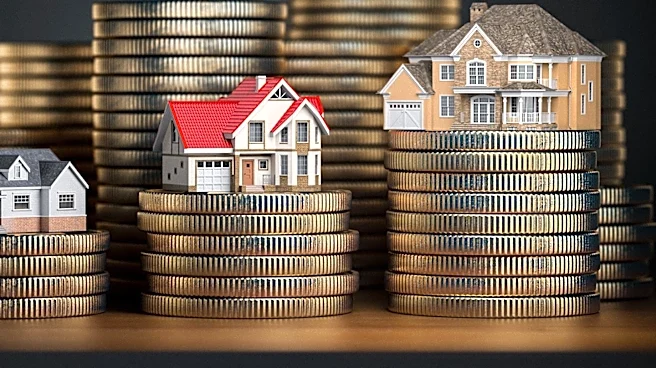
of up to $1,283,100 backed by Fannie Mae or Freddie Mac. This represents a 2.7% increase, or $34,000, from the current year's limit. In most parts of the country, the baseline limit will rise to $855,400. Conforming loans are those that Fannie Mae and Freddie Mac can purchase and guarantee, often packaged into mortgage-backed securities. Loans exceeding these limits are classified as jumbo or non-conforming loans, which are not eligible for purchase by Fannie Mae or Freddie Mac and typically remain with the lender. Conforming loans are generally easier to obtain, often requiring lower credit scores and smaller down payments. The FHFA determines these limits annually in November, basing the baseline on the change in the average U.S. single-family home price over the past four calendar quarters. For high-cost areas, the limit is tied to the area's median home value but cannot surpass 150% of the baseline limit.
Why It's Important?
While the increase in conforming loan limits might seem beneficial, experts like Ed Pinto, co-director of the American Enterprise Institute's housing center, suggest it will have minimal impact on affordability in high-cost regions like the Bay Area. The new high-cost ceiling of $1,283,100, while higher, still falls short of the median sales price for a single-family home in the entire Bay Area ($1,375,000) and significantly below San Francisco's median price ($2,390,000). This disparity means that many homes in these expensive markets will continue to require jumbo loans, which are often harder to qualify for due to stricter credit and down payment requirements. Consequently, the increased limit may not substantially broaden access to homeownership for a significant portion of potential buyers in these areas. The FHFA's index for setting these limits has not kept pace with the rapid appreciation of home prices in certain high-demand markets, highlighting a persistent challenge in making housing affordable.
What's Next?
The new conforming loan limits will be in effect for the upcoming year, influencing mortgage applications and lending practices across the U.S. In the Bay Area, despite the increase, the market is expected to continue facing affordability challenges, with a large segment of homes remaining beyond the reach of conforming loans. Lenders will adjust their offerings to reflect the new limits, potentially making conforming loans slightly more accessible for properties just below the new ceiling. However, the fundamental dynamics of high home prices and mortgage rates in areas like the Bay Area are unlikely to change significantly due to this adjustment alone. Policymakers and housing advocates may continue to explore other strategies to address housing affordability, as the current mechanism for adjusting loan limits appears insufficient for the most expensive markets.
Beyond the Headlines
The persistent gap between conforming loan limits and actual median home prices in high-cost areas like the Bay Area underscores a systemic issue in U.S. housing policy. While the FHFA aims to support a broad housing market, the methodology for setting limits struggles to adapt to localized, extreme price escalations. This creates a two-tiered market where buyers in expensive regions are often forced into more stringent jumbo loan requirements, potentially exacerbating wealth inequality and limiting upward mobility. The situation also highlights the ongoing debate about the role of government-backed entities like Fannie Mae and Freddie Mac in addressing housing affordability versus market forces. The inability of these limits to significantly impact affordability in key economic hubs could have long-term implications for labor mobility and economic growth in those regions, as high housing costs deter potential residents.