



What's Happening?
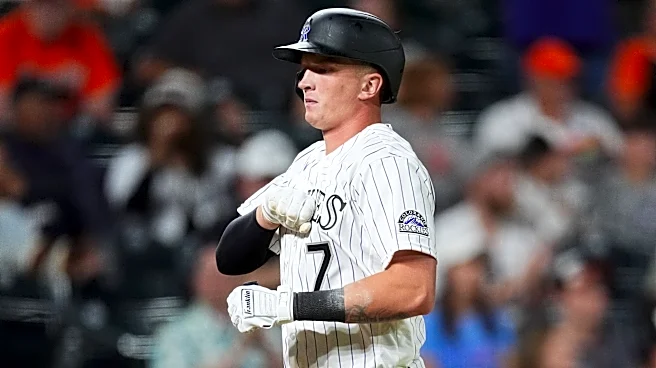
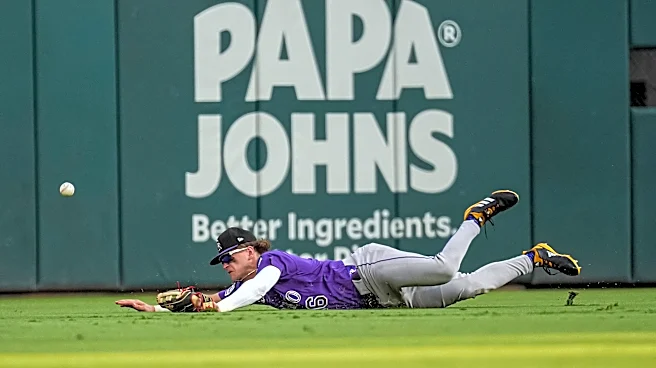
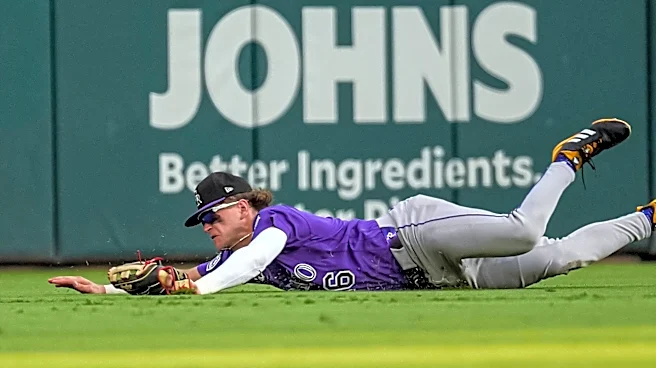
Colorado Rockies manager Warren Schaeffer has publicly expressed his support for player Cole Carrigg, emphasizing the team's need for his competitive 'edge' despite a recent incident where Carrigg reportedly made an inappropriate gesture to fans in Atlanta.
Schaeffer stated that he refuses to 'muzzle' Carrigg, as long as the player stays within acceptable behavioral boundaries. Carrigg was benched for two games following the incident, which Schaeffer believes had a greater impact than a single-game suspension. According to Schaeffer, the team has been lacking an aggressive spirit, and Carrigg, along with Zac Veen, provides this much-needed intensity. General Manager Josh Byrnes also acknowledged Carrigg's passion and competitive nature, noting that he 'runs hot at times' and needs to find the 'right dial setting' for his emotions. Carrigg himself admitted his actions were wrong and will not be repeated, but affirmed his commitment to his full-throttle playing style.
Why It's Important?
This situation highlights a significant challenge for sports organizations: balancing player individuality and competitive drive with professional conduct and fan relations. For the Colorado Rockies, a team described as having been 'soft' and struggling with a 10-game home losing streak, Carrigg's aggressive and passionate approach is seen as a potential catalyst for change. His 'edge' could be crucial in fostering a winning mentality and pushing back against a culture of losing. However, the incident also underscores the importance of accountability and setting clear boundaries for player behavior, especially in an era where player-fan interactions are highly scrutinized. The team's decision to support Carrigg's competitive spirit while also imposing consequences for his actions reflects an attempt to cultivate a more resilient and driven team without condoning inappropriate conduct. This approach could influence how other struggling sports franchises manage similar situations, seeking to harness player intensity while maintaining professional standards.
What's Next?
The immediate focus will be on Cole Carrigg's on-field performance and his ability to channel his competitive energy constructively without further incidents. Manager Warren Schaeffer and General Manager Josh Byrnes will likely continue to monitor Carrigg's behavior and provide guidance to ensure he maintains his 'edge' while adhering to professional standards. The team's overall performance will also be a key indicator of whether Carrigg's intensity, and the team's support for it, translates into improved results. If the Rockies begin to turn their season around, Carrigg's role and the team's management of his personality could become a case study in fostering a winning culture. Conversely, any repeat incidents or continued struggles could lead to renewed scrutiny of the team's approach. The situation also sets a precedent for how the Rockies will handle other players who exhibit similar passionate, yet sometimes volatile, personalities.
Beyond the Headlines
This event delves into the broader cultural dynamics within professional sports, particularly the tension between raw competitive instinct and the polished image expected of public figures. Carrigg's 'sandpaper than satin' personality, as described in the source, represents a type of athlete often celebrated for their grit but also criticized for their lack of composure. The Rockies' decision to embrace this 'edge' suggests a strategic shift towards prioritizing a more aggressive, 'unapologetic' playing style, potentially reflecting a belief that such intensity is necessary to break a long-standing losing cycle. This raises questions about the evolving definition of sportsmanship and the role of emotional expression in high-stakes competition. It also touches on the psychological aspect of performance, where some athletes thrive on intense emotional engagement, and the challenge for management is to harness this energy productively rather than suppress it entirely. The incident also highlights the constant negotiation between player authenticity and the commercial demands of professional sports, where fan perception and public image are critical.