







What's Happening?
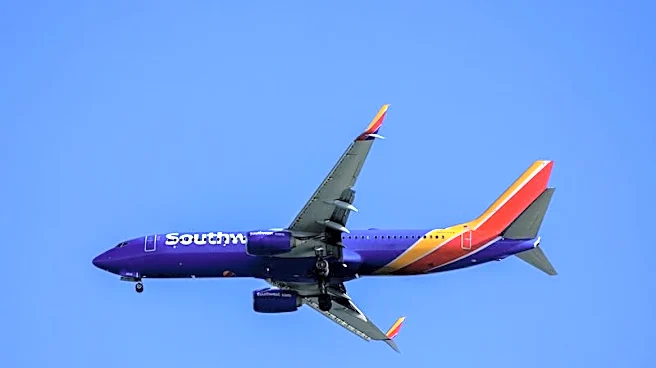
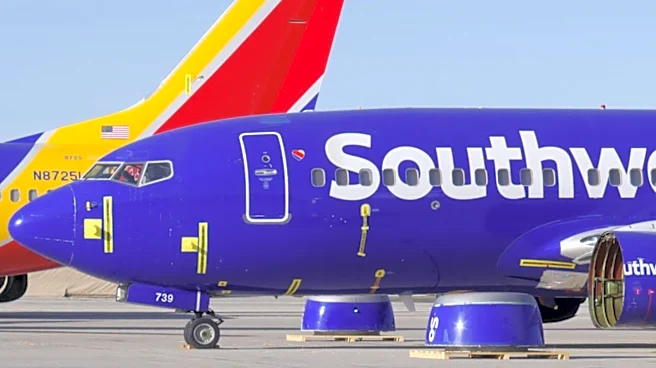
Southwest Airlines reported a 9% increase in second-quarter profit, driven by higher fares, but its third-quarter earnings forecast fell short of Wall Street expectations. The airline projected adjusted earnings between 50 and 75 cents per share, below
the anticipated 82 cents. Despite a projected sales increase of up to 19.5%, Southwest plans to keep capacity flat or contract it slightly. The airline's fuel costs surged by 67% to $2.22 billion, impacting profitability. Southwest has adjusted its business model, ending open-seating and introducing basic economy fares to boost revenue.
Why It's Important?
Southwest Airlines' earnings report underscores the ongoing challenges faced by the airline industry, particularly the impact of volatile fuel prices. The company's efforts to adapt its business model reflect a broader industry trend towards maximizing revenue amid rising operational costs. The discrepancy between projected and actual earnings highlights the difficulty airlines face in balancing fare increases with cost management. This situation could influence investor confidence and strategic decisions within the industry, as airlines strive to maintain profitability in a challenging economic environment.
What's Next?
Southwest Airlines' future performance will depend on its ability to manage fuel costs and adapt its business model to changing market conditions. The airline's decision to contract capacity and adjust fare structures may set a precedent for other carriers facing similar challenges. Investors and industry analysts will closely monitor Southwest's financial results and strategic initiatives in the coming quarters. Additionally, the airline's approach to customer service and operational efficiency will be critical in maintaining its competitive edge.