







What's Happening?
The Federal Reserve is currently navigating a complex economic landscape as inflation rates remain elevated, primarily due to recent energy price fluctuations. The Federal Open Market Committee (FOMC) has observed that headline Personal Consumption Expenditures
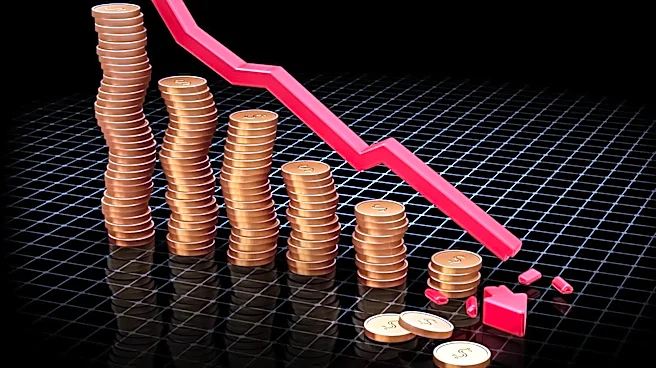
(PCE) inflation reached 4.1% over the past year, driven by a surge in petroleum prices. Although recent declines in oil prices may alleviate some inflationary pressures, core inflation, which excludes volatile food and energy prices, has risen to 3.4%. This increase in core inflation is concerning for the Federal Reserve, as it suggests underlying inflationary pressures that could persist. The FOMC is closely monitoring these developments to determine the appropriate monetary policy response, balancing the need to control inflation with the risk of triggering a recession.
Why It's Important?
The Federal Reserve's handling of inflation is crucial for the U.S. economy, as it impacts interest rates, consumer spending, and overall economic stability. Persistent inflation above the FOMC's 2% target could lead to higher interest rates, affecting borrowing costs for businesses and consumers. This situation is further complicated by geopolitical tensions in the Middle East, which have previously disrupted energy supplies and could do so again, potentially exacerbating inflation. The Fed's decisions will influence economic growth, employment rates, and the financial markets, making it a critical issue for policymakers and stakeholders across various sectors.
What's Next?
The Federal Reserve is expected to closely analyze upcoming inflation data to assess whether current inflationary trends are temporary or indicative of a more persistent issue. If core inflation continues to rise, the FOMC may consider tightening monetary policy by raising interest rates to curb inflation. However, this approach carries the risk of slowing economic growth and increasing unemployment. The Fed aims to avoid past mistakes of delayed responses to inflation, but it must also be cautious not to over-tighten and trigger a recession. The upcoming data releases will be pivotal in shaping the Fed's policy decisions.