


What's Happening?
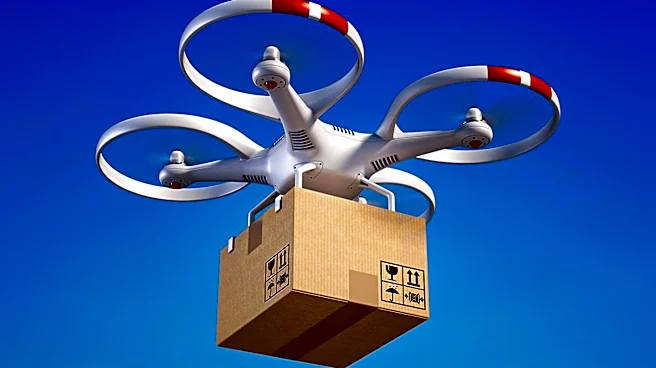
Lowe’s has initiated its first drone delivery service, piloting the program from its store in Matthews, North Carolina, near Charlotte. This service allows customers to order eligible small home improvement supplies through the DoorDash app, with Wing
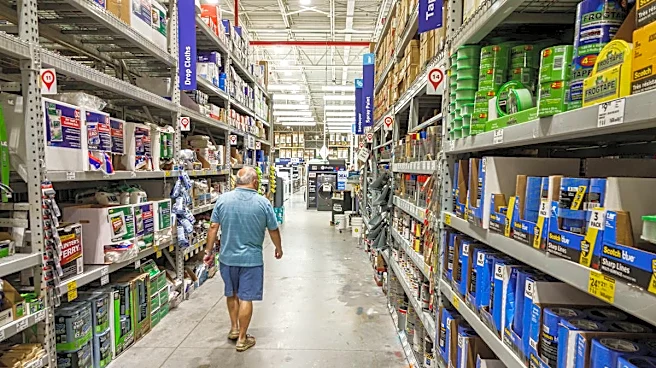
drones handling the deliveries. Lowe’s states that deliveries can arrive in as fast as 20 minutes. The program makes Lowe’s the first home improvement retailer to offer drone delivery, expanding existing drone delivery operations by Wing and DoorDash in the Charlotte area. The initial product list includes lightweight items such as hand tools, paint products, and common household supplies like soap, tape, all-purpose cleaner, and batteries. This service aims to address the common problem of needing a missing item in the middle of a project, allowing customers to receive supplies quickly without leaving their project or jobsite.
Why It's Important?
This drone delivery pilot by Lowe’s is a significant development for the U.S. retail and logistics industries. It marks the entry of drone delivery into the home improvement sector, potentially revolutionizing how consumers acquire small, urgent supplies. For Lowe’s, it represents an innovative solution to enhance customer convenience and differentiate itself in a competitive market, addressing a specific pain point for both DIY enthusiasts and professionals. The partnership with Wing and DoorDash further validates the viability and scalability of drone delivery technology for diverse retail categories beyond food and convenience items. This initiative could set a precedent for other large retailers to explore drone delivery, accelerating the adoption of this technology across the country and impacting last-mile delivery strategies, urban logistics, and consumer expectations for speed and convenience.
What's Next?
The Lowe’s drone delivery pilot will likely be closely monitored for its efficiency, customer satisfaction, and operational challenges. If successful, the program could expand to more Lowe’s locations across the U.S., potentially increasing the range of eligible products and delivery areas. The data collected from this pilot will be crucial for refining drone delivery logistics, including flight paths, payload capacities, and regulatory compliance. Other home improvement retailers and even general merchandise stores may observe Lowe’s progress and consider implementing similar drone delivery solutions. This could also lead to further advancements in drone technology, infrastructure development for drone operations, and potentially new regulatory frameworks to govern widespread commercial drone delivery services.
Beyond the Headlines
Lowe’s drone delivery service has deeper implications beyond immediate retail convenience. Ethically, it raises questions about privacy concerns related to drone surveillance and data collection in residential areas. Environmentally, while drones offer a potentially greener alternative to traditional delivery vehicles for small packages, the energy consumption and noise pollution from widespread drone operations need careful consideration. Legally, the expansion of drone delivery will necessitate clearer regulations regarding airspace management, safety protocols, and liability in case of accidents. Socially, the sight of drones delivering goods could become a common urban feature, altering the soundscape and visual environment of neighborhoods. This technological shift also highlights the ongoing automation of labor, potentially impacting traditional delivery jobs while creating new roles in drone operation and maintenance.