





What's Happening?
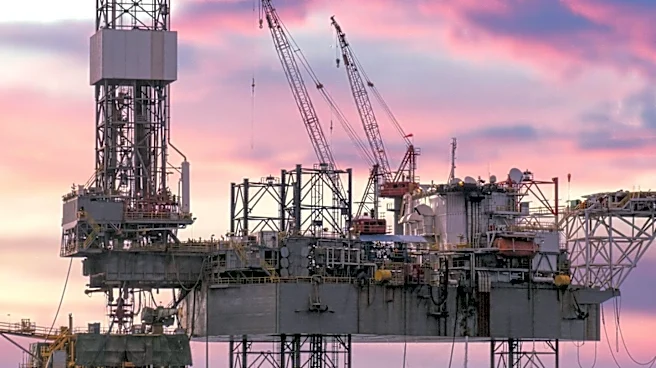
Baker Hughes, a leading oilfield services provider, has announced expectations of a modest decline in global oil and gas spending for the year. The company attributes this to reduced spending in Europe and the Middle East, despite growth in Latin America,
offshore Africa, and North America. The ongoing conflict in the Middle East, particularly tensions between the U.S. and Iran, has led to a cautious approach by producers, impacting drilling activity. Despite these challenges, Baker Hughes reported a significant increase in industrial and energy technology orders, reaching a record $7.1 billion. The company also anticipates a slight revenue hit in its Industrial and Energy Technology (IET) segment due to the conflict.
Why It's Important?
The anticipated decline in global oil spending by Baker Hughes reflects the broader impact of geopolitical tensions on the energy sector. The cautious stance adopted by producers in response to the Middle East conflict underscores the volatility and uncertainty in the market. This situation could affect global oil supply and prices, influencing energy policies and investment decisions. The increase in industrial and energy technology orders suggests a shift towards more sustainable and innovative solutions, highlighting the industry's adaptation to changing market conditions.
What's Next?
Baker Hughes and other industry players are likely to continue monitoring geopolitical developments and adjusting their strategies accordingly. The company's focus on maximizing production from existing assets while maintaining flexibility suggests a cautious approach to future investments. As the situation in the Middle East evolves, stakeholders will need to navigate the challenges posed by geopolitical tensions and market volatility. The company's performance in the coming quarters will provide insights into the resilience of the energy sector amidst these challenges.