


What's Happening?
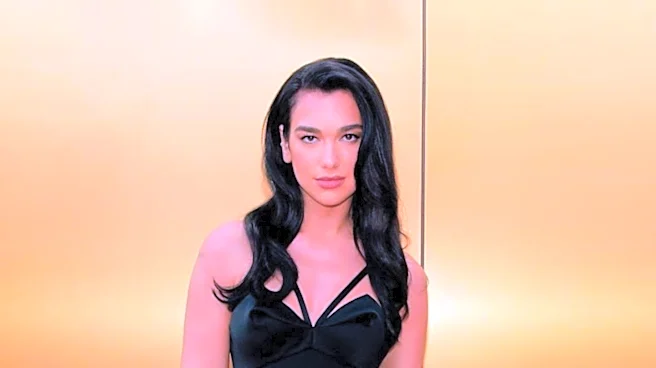
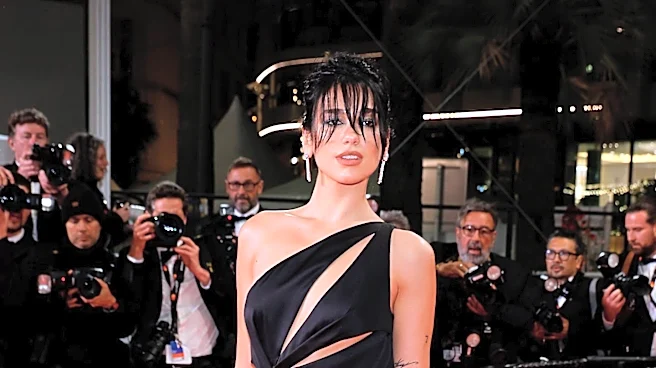
Pop singer Dua Lipa shared her last-minute Halloween costume, which she assembled with husband Callum Turner just five minutes before leaving the house. Despite the rushed preparation, Lipa's costume was a high-fashion ensemble, featuring a black maxi
dress from the Lou De Bètoly Fall/Winter 2026 ready-to-wear collection. The dress was a sheer design with a bustier-style bodice and beaded floral lace. She layered it under a fluffy black fur coat and accessorized with a multi-strand rosary necklace from the Gucci Fall/Winter 2002 collection by Tom Ford, sourced by Era London. Lipa completed her 'gothic witch' look with smudgy black eye makeup and pointy black nails. Callum Turner, meanwhile, wore a clown mask inspired by the character Chains from the video game Payday 2.
Why It's Important?
This event highlights the unique intersection of celebrity culture, fashion, and social media trends. Dua Lipa's ability to create a 'last-minute' costume using high-end designer pieces underscores the accessibility of luxury fashion for celebrities and their influence on public perception of style. It also showcases how even spontaneous celebrity moments can become significant fashion statements, driving engagement and setting trends. For the fashion industry, it provides organic promotion for brands like Lou De Bètoly and vintage Gucci, demonstrating the enduring appeal of designer pieces. The relatability of a 'last-minute' costume, juxtaposed with its high-fashion execution, creates a compelling narrative that resonates with a broad audience, reinforcing Lipa's status as a style icon.
What's Next?
The widespread attention given to Dua Lipa's Halloween costume could further popularize the trend of incorporating high-fashion elements into holiday attire, potentially influencing consumer choices for future seasonal events. This could also lead to increased interest in vintage designer pieces, as seen with her Gucci necklace, boosting the resale market for luxury goods. Brands might leverage such celebrity endorsements by creating more accessible versions of similar styles or by collaborating with influencers to promote their collections. The event also reinforces the power of social media for celebrities to share personal moments, which in turn generates significant media coverage and public discussion around their lifestyle and fashion choices.
Beyond the Headlines
This seemingly lighthearted story subtly reflects broader cultural dynamics around authenticity and aspiration. While Lipa's 'last-minute' claim might be relatable, the reality of her access to designer archives highlights the vast difference between celebrity and everyday experiences. It also speaks to the curated nature of celebrity 'spontaneity' on social media, where even casual posts can be carefully constructed to maintain a public image. The blend of gothic aesthetics with high fashion also points to evolving style trends, where traditional boundaries between subcultures and mainstream luxury are increasingly blurred. This phenomenon encourages a more experimental approach to personal style, where individuals are inspired to mix and match different fashion elements to create unique looks.