





What's Happening?
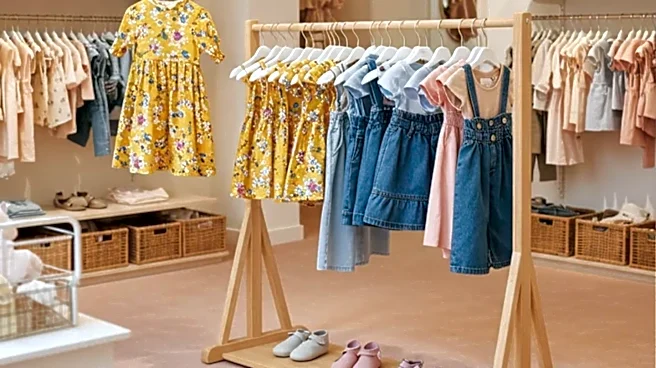
Bundle to Bundle has launched a subscription service for renting premium children's clothing, targeting families with children from newborn to seven years old. The service operates on a monthly membership model, starting at $50 per month, which includes
free two-way shipping. Subscribers can select curated pieces from high-end children's fashion labels and swap items as their children grow or their needs change. This model aims to provide access to quality apparel without the high cost of purchasing new items that children quickly outgrow. The company emphasizes convenience, sustainability by extending garment life, and affordability for premium brands. The process involves starting a membership, browsing selections, receiving clothes, and swapping them as needed, with the option to pause or cancel at any time.
Why It's Important?
This service addresses several key consumer needs in the U.S. market. Economically, it makes premium children's clothing more accessible to a wider range of families, as the cost of high-quality children's wear can be prohibitive given how quickly children outgrow their clothes. This can lead to significant savings for parents who desire designer or well-made garments for their children. Environmentally, the rental model promotes sustainability by extending the lifecycle of clothing, reducing textile waste, which is a growing concern highlighted by the U.S. EPA's data on discarded textiles. Socially, it offers convenience to busy parents by eliminating the need for frequent shopping trips for new sizes and styles. The rise of such subscription services reflects a broader shift in consumer behavior towards access over ownership, particularly for items with a short utility span.
What's Next?
The growth of services like Bundle to Bundle suggests a continued expansion of the clothing rental market, particularly in niche segments like children's wear. As consumer awareness of sustainability and cost-effectiveness increases, more families may opt for rental models. The company may look to expand its brand partnerships, introduce tiered membership options, or enhance personalization features to attract and retain subscribers. Competitors in the children's clothing market, both traditional retailers and other rental services, will likely adapt by offering similar models or emphasizing their own unique value propositions. The success of this model could also encourage its adoption in other areas where items have a short use-cycle or high initial cost.
Beyond the Headlines
The emergence of premium children's clothing rental services like Bundle to Bundle signifies a broader cultural shift towards a circular economy and conscious consumption. This model challenges traditional retail paradigms by prioritizing utility and shared resources over individual ownership, potentially influencing how consumers view and value clothing. Ethically, it promotes responsible consumption and reduces the environmental footprint associated with fast fashion and frequent purchases. Legally, as the rental market grows, there may be evolving considerations around product liability, wear and tear policies, and intellectual property for rented designer items. Culturally, it could normalize the idea of renting everyday items, extending beyond special occasions, and reshape consumer expectations for convenience and value in the apparel industry.