



What's Happening?
The U.S. economy is anticipated to continue its robust growth into 2027, with an expected annual rate of 2.7%, potentially increasing further due to sustained spending by upper-income consumers, ongoing AI development, and expansionary government fiscal
policies, particularly in defense. This projection, from RSM, suggests a 15% probability of a recession within the next 12 months. The labor market is expected to maintain full employment, with an unemployment rate between 4.0% and 4.2%, and inflation is projected to remain at or above 2.5%. However, this growth is accompanied by an uneven distribution of economic gains, with higher-income consumers driving consumption increases, while lower-income households may need to deplete savings and use credit to manage expenses. Long-term interest rates are expected to rise, with the 10-year Treasury yield potentially reaching 5.2% by mid-2027, influenced by strong nominal growth and persistent inflation.
Why It's Important?
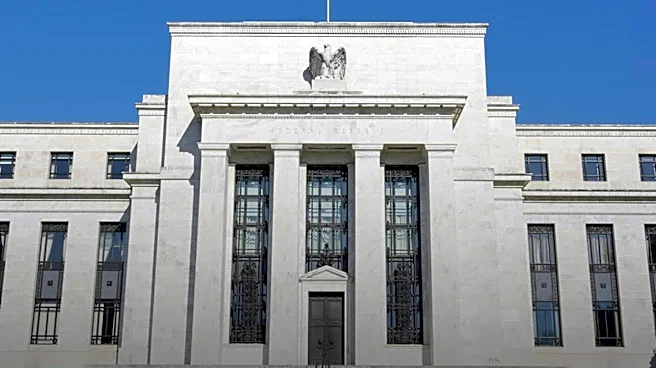
This economic outlook highlights a significant divergence in the U.S. economic experience, where overall growth masks increasing inequality. The reliance on upper-income consumer spending for continued economic expansion suggests that a large segment of the population, particularly lower-income households, may not fully benefit from the projected growth. This disparity could exacerbate social and economic tensions, potentially leading to public discontent. The anticipated rise in long-term interest rates, driven by inflation and strong growth, will impact borrowing costs for businesses and consumers, potentially slowing investment in certain sectors. Furthermore, the Federal Reserve's stance on interest rates, with potential hikes in late 2026 and early 2027, indicates a continued focus on combating inflation, which could further strain households already struggling with sticky prices. The identified risks, including inflation, energy prices, and financial market volatility, underscore the fragility of the current economic trajectory.
What's Next?
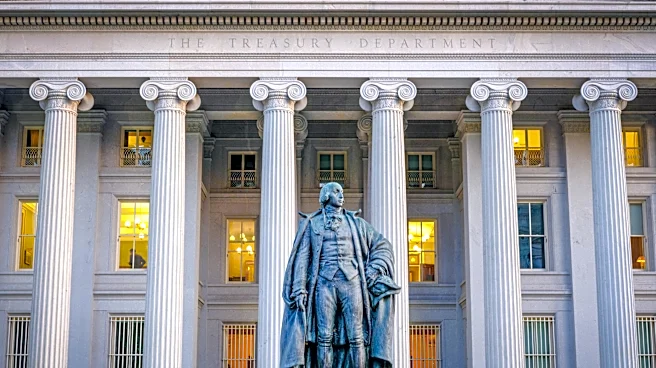
The Federal Reserve is expected to implement further interest rate hikes, with a 25 basis-point increase anticipated in December 2026 and another in March 2027, as it aims to restore price stability. The U.S. government faces critical fiscal decisions, including the need to address the $41.1 trillion debt ceiling in 2027 and secure funding agreements for the upcoming year, including a projected $1.5 trillion military spending bill. These fiscal actions, coupled with the Fed's monetary policy, will significantly influence the economic landscape. The housing market is expected to remain subdued, with housing starts reflecting a restrained pace and mortgage rates floating between 6.5% and 7%. The ongoing AI build-out, while contributing to economic growth, is projected to see a deceleration in capital expenditures, with investment potentially rotating into the real economy to support middle-market companies.
Beyond the Headlines
The projected economic scenario reveals a complex interplay of factors that could reshape the U.S. economy. The emphasis on AI development and defense spending as drivers of growth suggests a strategic shift in national priorities, potentially at the expense of broader social welfare if economic inequality continues to widen. The 'K-shape economy,' where different segments of the population experience vastly different economic outcomes, could lead to increased political polarization and demands for policy interventions aimed at wealth redistribution or social safety nets. The persistent inflation and rising interest rates, while intended to stabilize the economy, could disproportionately affect vulnerable populations and small businesses. The reliance on external factors like geopolitical stability, particularly in the Middle East, for energy prices and overall economic stability, highlights the interconnectedness of global events with domestic economic performance.