








What's Happening?
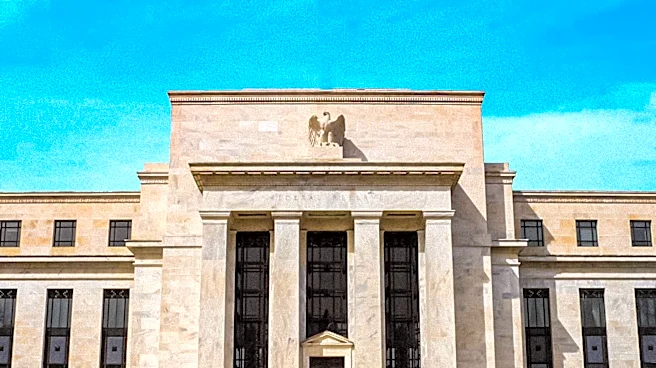
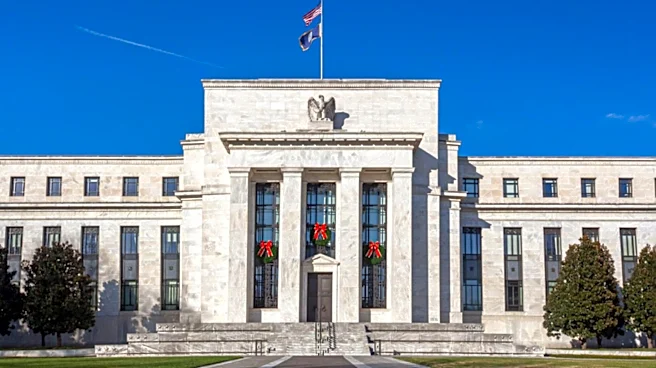
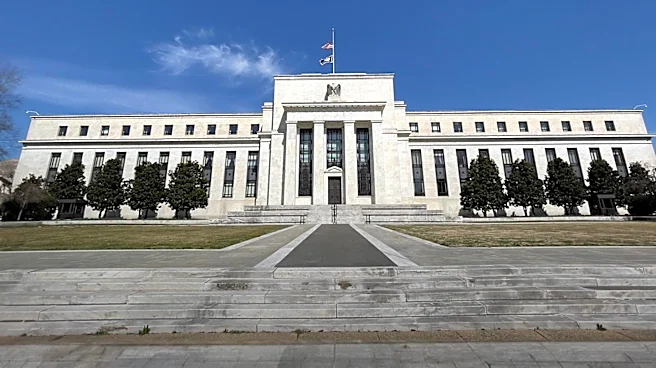
The Federal Reserve has released its annual stress test results, indicating that major U.S. banks, including Citigroup, can withstand significant financial losses in a severe global recession scenario. The test involved a hypothetical situation where
unemployment surged to 10%, commercial real estate prices dropped by 39%, and home prices fell by 30%. Despite these challenges, all 32 banks examined remained above their minimum capital requirements. The common equity tier 1 capital ratio, a crucial measure for absorbing losses, fell by 1.6 percentage points but stayed comfortably above the required minimums. Projected losses for the banks included $200 billion tied to credit cards, $160 billion from commercial and industrial loans, and $75 billion from commercial real estate. Federal Reserve Vice Chair for Supervision Michelle Bowman emphasized the strength of the banking system in light of these results.
Why It's Important?
The stress test results are significant as they demonstrate the robustness of the U.S. banking system in the face of potential economic downturns. This resilience is crucial for maintaining financial stability and ensuring that banks can continue to lend to households and businesses even during challenging times. The results also come at a pivotal moment for bank regulation, as the Federal Reserve has decided to leave stress test buffers untouched until 2027 while reworking the methodology. This decision reflects industry concerns and could reshape future capital requirements. The ability of banks to absorb losses without compromising their lending capacity is vital for economic recovery and growth, especially in uncertain economic conditions.
What's Next?
The Federal Reserve's decision to leave stress test buffers unchanged until 2027 suggests that banks will focus on the upcoming Basel III Endgame proposal, expected later this year. This proposal may influence how much capital banks must hold against future downturns. As regulators rework the stress test methodology, banks will likely continue to adapt to new regulatory requirements. The ongoing evaluation of capital requirements will be crucial for ensuring that banks remain prepared for potential economic challenges. Stakeholders, including banks and regulators, will need to closely monitor these developments to maintain financial stability.