


What's Happening?
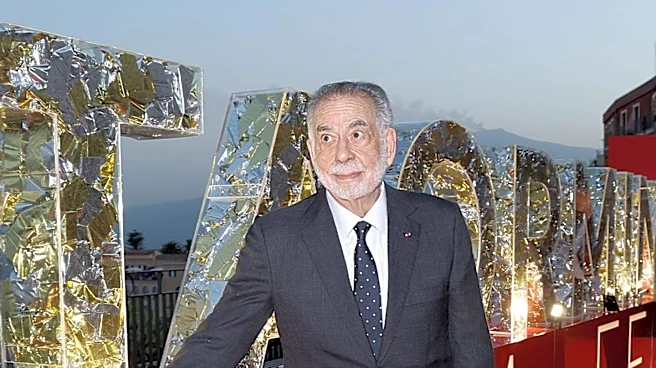
Francis Ford Coppola is widely recognized for his significant contributions to cinema, particularly for directing 'Apocalypse Now,' a project that commenced in 1976 and spanned three years of production. His filmography also prominently features 'The
Godfather' (1972), which is considered a seminal work in the gangster film genre. Coppola further expanded this narrative with 'The Godfather Part II' (1974) and 'The Godfather Part III' (1990), completing what is known as 'The Godfather Trilogy.' Beyond these iconic films, Coppola's earlier work includes contributing to the screenplay for 'Patton,' which earned him an Oscar in 1971, and directing 'Dementia 13' as his first feature film. He also directed 'Conversation secrète,' which won the Palme d'Or in 1974, and later 'Dracula' in 1993. His career has seen him navigate both critical acclaim and financial challenges, with ventures like his wine production company helping to alleviate debts.
Why It's Important?
Francis Ford Coppola's body of work has profoundly influenced American cinema and global filmmaking. 'The Godfather' and its sequels redefined the gangster genre, setting new standards for storytelling, character development, and cinematic artistry. 'Apocalypse Now' is celebrated for its ambitious scope and its unflinching portrayal of the Vietnam War's psychological toll, pushing the boundaries of war films. These films are not only critical successes but also cultural touchstones that continue to be studied and referenced in film schools and by contemporary filmmakers. Coppola's innovative approach to filmmaking, his willingness to tackle complex themes, and his distinctive visual style have left an indelible mark on the industry, shaping how stories are told on screen and influencing generations of directors and screenwriters. His ability to blend commercial success with artistic integrity has made him a legendary figure in Hollywood.
What's Next?
While the provided information does not detail Francis Ford Coppola's immediate future projects or scheduled decisions, his historical pattern suggests a continued engagement with filmmaking, albeit sometimes with significant intervals between projects. He has previously returned to directing after hiatuses, as seen with 'Youth Without Youth' after a ten-year break, and more recently with films like 'Tetro' and 'Twixt.' Coppola also remains an influential producer through his company American Zoetrope, supporting films by his children, Sofia and Roman Coppola, and other projects. Given his enduring passion for cinema and his history of pursuing ambitious personal projects, it is plausible that he may undertake new directorial ventures or continue his role as a producer, further contributing to the cinematic landscape. His legacy ensures that any future endeavors will be met with significant industry and public interest.
Beyond the Headlines
Beyond the immediate recognition of his famous films, Francis Ford Coppola's career highlights the complex interplay between artistic vision and financial realities in the film industry. His struggles with funding and the extensive production challenges of films like 'Apocalypse Now' underscore the immense pressures faced by auteur directors. His diversification into ventures like wine production demonstrates a pragmatic approach to sustaining his artistic endeavors and maintaining creative independence. Furthermore, Coppola's role as a mentor and producer for his children, Sofia and Roman, illustrates a dynastic influence within Hollywood, where artistic legacies are passed down and evolve. This multi-generational involvement in filmmaking reflects broader themes of family, legacy, and the enduring power of storytelling within the entertainment industry, showcasing how personal and professional lives can intertwine to shape a lasting cultural impact.