






What's Happening?
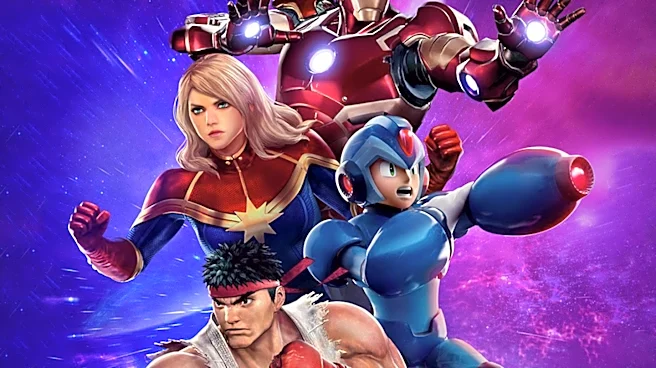
UHA Mikakuto, in collaboration with Kindai University, has developed 'Energy Arts,' a card-shaped concentrated energy drink now available in Japan. This innovative product features 24 unique package designs based on characters from Capcom's 'Street Fighter
6,' including Ryu, Chun-Li, Dhalsim, and Vega. Each card contains 12 ml of a caffeine-free energy drink formulated with amino acids like arginine and citrulline. The unique selling proposition is that consumers must fold or snap the card to access the liquid, effectively destroying the collectible packaging to consume the product. UHA Mikakuto markets 'Energy Arts' for 'smart replenishment' during activities such as esports matches, university exams, long drives, and important meetings, emphasizing quick, convenient energy. A Japanese news program has even predicted 'Energy Arts' to be among the top five popular products in Japan by 2027, highlighting its potential market impact.
Why It's Important?
This product launch is significant as it merges three established Japanese consumer categories: character licensing, collectible packaging, and portable functional beverages. The 'Street Fighter' branding is crucial, transforming a novelty drink into a highly desirable item for collectors who are driven to complete sets. This creates a unique tension between the desire to collect and the need to consume, potentially driving higher sales as consumers may purchase multiple cards to both collect and use. The product's forecast for popularity in 2027 suggests a potential shift in how functional beverages are packaged and marketed, moving towards more interactive and collectible formats. For the beverage industry, 'Energy Arts' represents an innovative approach to product differentiation and consumer engagement, particularly within the growing market for esports and on-the-go consumption.
What's Next?
The success of 'Energy Arts' in Japan could pave the way for similar product innovations in the global functional beverage market. If the product gains significant traction, other companies may explore collaborations with popular media franchises to create collectible, consumable items. Online reactions already indicate consumer interest in similar formats for other franchises like Pokémon and Yu-Gi-Oh, suggesting a broader market appetite for such products. UHA Mikakuto may expand the 'Energy Arts' line with different character collaborations or explore international distribution if the Japanese market response is strong. The product's performance will also be closely watched by marketing strategists interested in the effectiveness of combining collectible culture with consumable goods, potentially influencing future product development strategies across various industries.
Beyond the Headlines
Beyond its immediate market impact, 'Energy Arts' delves into the psychological aspects of consumer behavior, particularly within collector culture. The inherent conflict between preserving a collectible and consuming its contents creates a unique dilemma for buyers, amplifying the product's perceived value and driving repeat purchases. This strategy taps into the 'fear of missing out' (FOMO) and the satisfaction of completing a set, powerful motivators in consumer psychology. Ethically, it raises questions about sustainability, as the collectible packaging is designed to be destroyed, potentially increasing waste. However, it also highlights the ingenuity of product design in creating novel consumption experiences. This product could be a case study in how brands can leverage intellectual property and innovative packaging to create a distinct market niche and foster deep consumer engagement, blurring the lines between product, game, and collectible.