







What's Happening?
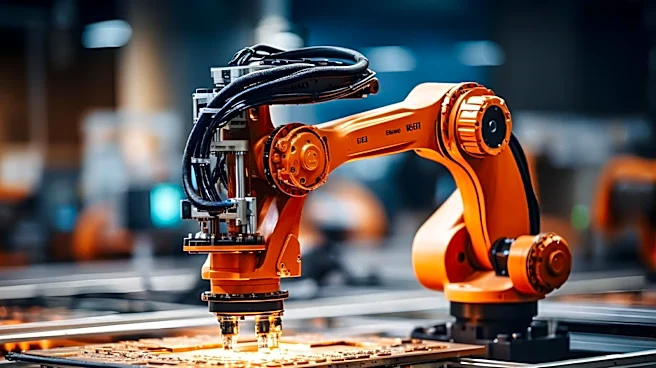
In 2025, China's factories produced 773,074 industrial robots, marking a 28% increase from the previous year. This surge in production is part of China's broader strategy to address its demographic challenges by automating industries. The country has
reached the Lewis Turning Point, where the surplus of rural labor has diminished, leading to a labor shortage. As a result, China is investing heavily in automation to maintain industrial output. The government's Made in China 2025 initiative has prioritized robotics, aiming for a 70% domestic market share for home-grown brands. In 2024, Chinese-made robots accounted for 57% of the domestic market, a significant increase from a decade ago.
Why It's Important?
China's rapid expansion in industrial robot production is reshaping the global manufacturing landscape. By automating its industries, China is addressing its labor shortages and maintaining its position as a manufacturing powerhouse. This shift challenges the traditional development model, where countries industrialize by leveraging cheap labor. China's strategy of investing in automation at an earlier stage of economic development could set a precedent for other nations facing similar demographic challenges. The country's focus on robotics also highlights its commitment to technological self-reliance and moving up the value chain.
What's Next?
China's continued investment in robotics is expected to further solidify its position as a global leader in automation. The country's focus on developing advanced robotics technologies, such as embodied intelligence, will likely drive innovation and competitiveness in the industry. As China increases its production of humanoid robots, it may also influence global market dynamics, potentially lowering costs and increasing accessibility. Other countries, particularly those with young populations like India, may need to adapt their industrial strategies to remain competitive in a rapidly automating world.